

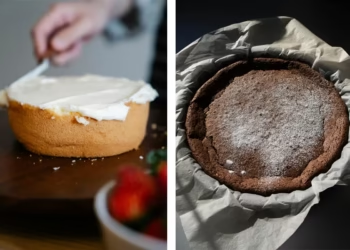
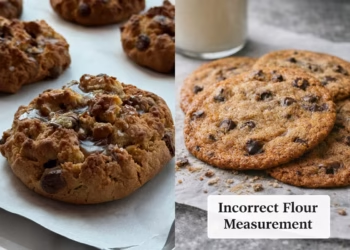
Convection vs conventional oven baking can be confusing — especially if you’re pulling out cookies that are golden on one side and pale on the other, or a cake that rises unevenly with one side higher.
If you’ve experienced these issues, your oven settings might be the culprit.
Most modern ovens come with two main baking modes: convection and conventional (sometimes called regular or traditional bake). Understanding the difference between these settings can transform your baking results from inconsistent to reliably delicious.
This guide breaks down exactly how each oven type works, when to use which setting, and how to adjust your recipes for the best results every time.
Quick Guide Summary
- Convection ovens use a fan to circulate hot air for faster, more even baking
- Conventional ovens heat from the top and bottom without air circulation
- Convection typically requires 25°F lower temperature or 20-25% shorter baking time
- Best for convection: Cookies, sheet cakes, roasted vegetables, pastries
- Best for conventional: Delicate cakes, custards, bread, soufflés
- Most home bakers can achieve great results with either setting once they understand simple adjustments
Table of Contents
What Is a Conventional Oven? Most traditional recipes are written for this setting.
This is why most beginners start with convection vs conventional oven baking using the conventional (regular) setting first.
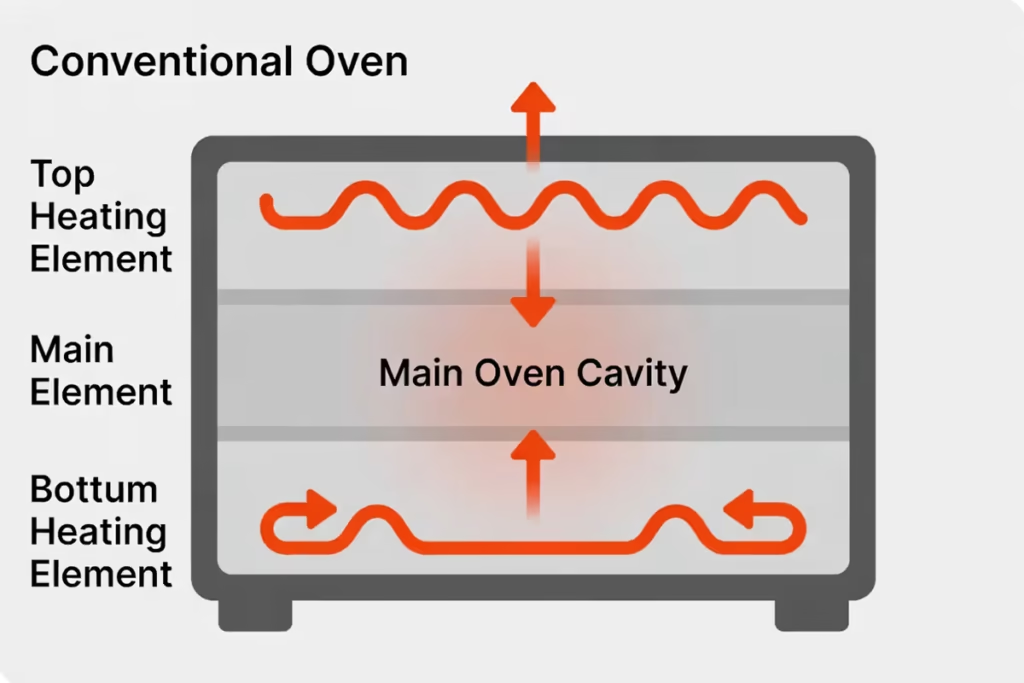
A conventional oven (also called a traditional or regular oven) is the standard baking method most people learn with first.
These ovens have heating elements at the top and bottom of the oven cavity. When you set your oven to 350°F, these elements heat up and radiate warmth into the oven space.
The heat rises naturally, creating temperature zones inside the oven. The top rack tends to be hotter, the bottom rack cooler, and the middle rack is usually the most consistent.
Because there’s no fan forcing air around, conventional ovens rely on natural heat circulation. This creates a gentler, more stable environment that’s ideal for certain delicate baked goods.
Why conventional ovens are popular:
- Simple, predictable heat pattern
- No learning curve for temperature adjustments
- Gentler on delicate batters and doughs
- Most traditional recipes are written for this setting
What Is a Convection Oven?
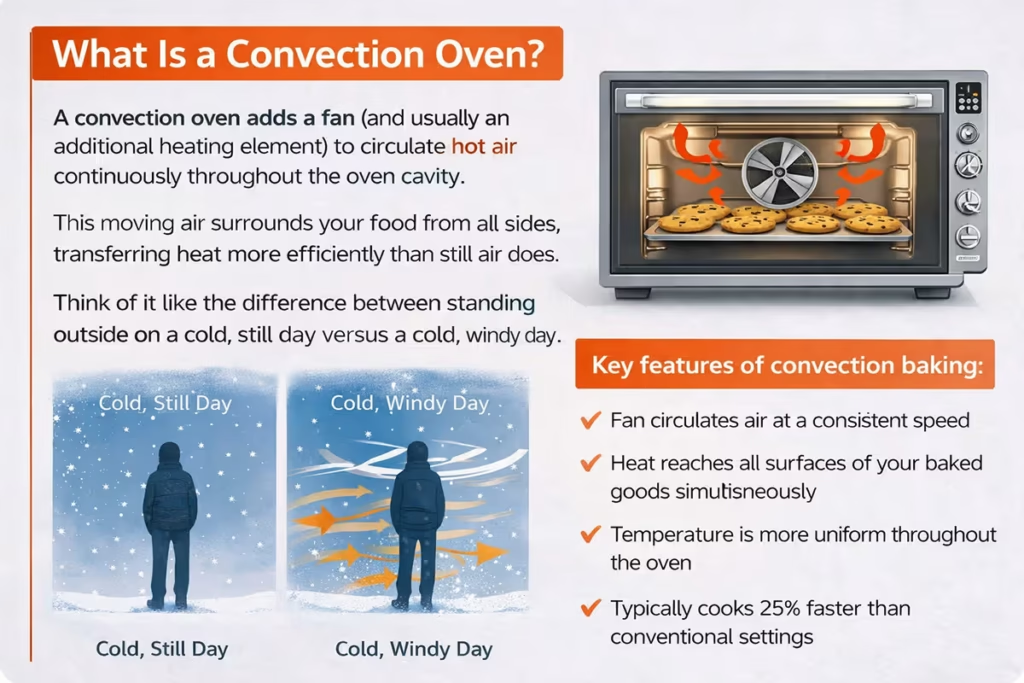
A convection oven adds a fan (and usually an additional heating element) to circulate hot air continuously throughout the oven cavity.
This moving air surrounds your food from all sides, transferring heat more efficiently than still air does.
Think of it like the difference between standing outside on a cold, still day versus a cold, windy day. The wind makes it feel colder because it’s constantly moving heat away from your body. In an oven, that moving air cooks your food faster and more evenly.
Key features of convection baking:
- Fan circulates air at a consistent speed
- Heat reaches all surfaces of your baked goods simultaneously
- Temperature is more uniform throughout the oven
- Typically cooks 25% faster than conventional settings
Many home ovens now include a convection option, often labeled “Convection Bake” or showing a fan icon on the control panel.
Key Differences in Convection vs Conventional Oven Baking
The main differences in convection vs conventional oven baking come down to how heat moves and whether there’s a fan involved.
Understanding what actually changes between these two settings helps you make better baking decisions.
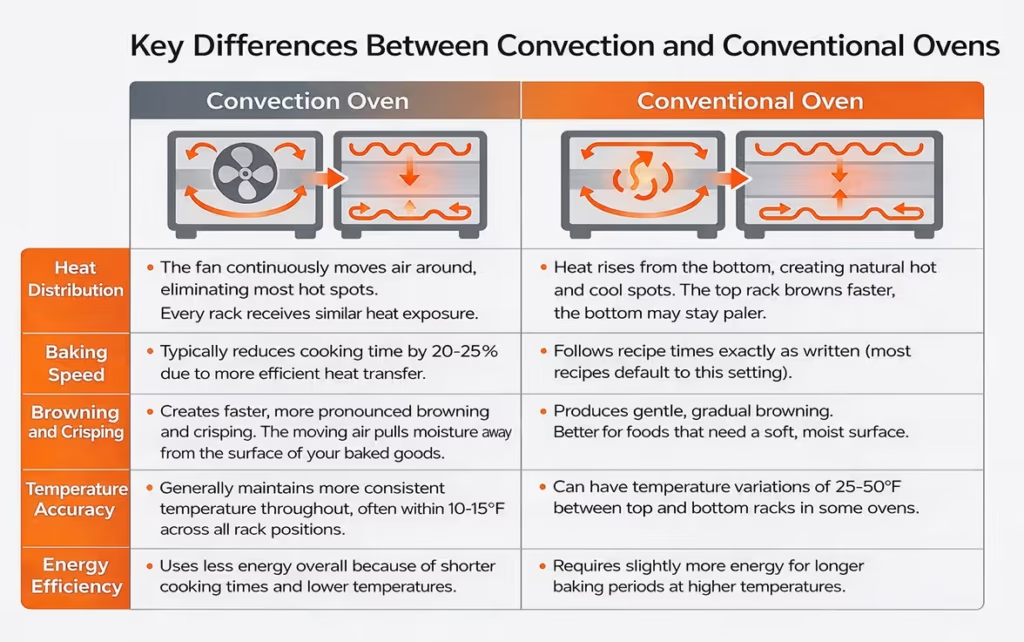
Heat Distribution
Conventional: Heat rises from the bottom, creating natural hot and cool spots. The top rack browns faster, the bottom may stay paler.
Convection: The fan continuously moves air around, eliminating most hot spots. Every rack receives similar heat exposure.
Baking Speed
Conventional: Follows recipe times exactly as written (most recipes default to this setting).
Convection: Typically reduces cooking time by 20-25% due to more efficient heat transfer.
Browning and Crisping
Conventional: Produces gentle, gradual browning. Better for foods that need a soft, moist surface.
Convection: Creates faster, more pronounced browning and crisping. The moving air pulls moisture away from the surface of your baked goods.
Temperature Accuracy
Conventional: Can have temperature variations of 25-50°F between top and bottom racks in some ovens.
Convection: Generally maintains more consistent temperature throughout, often within 10-15°F across all rack positions.
Energy Efficiency
Convection: Uses less energy overall because of shorter cooking times and lower temperatures.
Conventional: Requires slightly more energy for longer baking periods at higher temperatures.
When to Use Convection vs Conventional for Baking
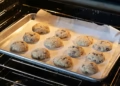
For most home baking like cookies, sheet cakes, and pastries, convection often produces better, more consistent results. The even heat means your cookies brown uniformly, and you can bake multiple sheets at once without rotating.
But some recipes genuinely perform better with conventional heat.
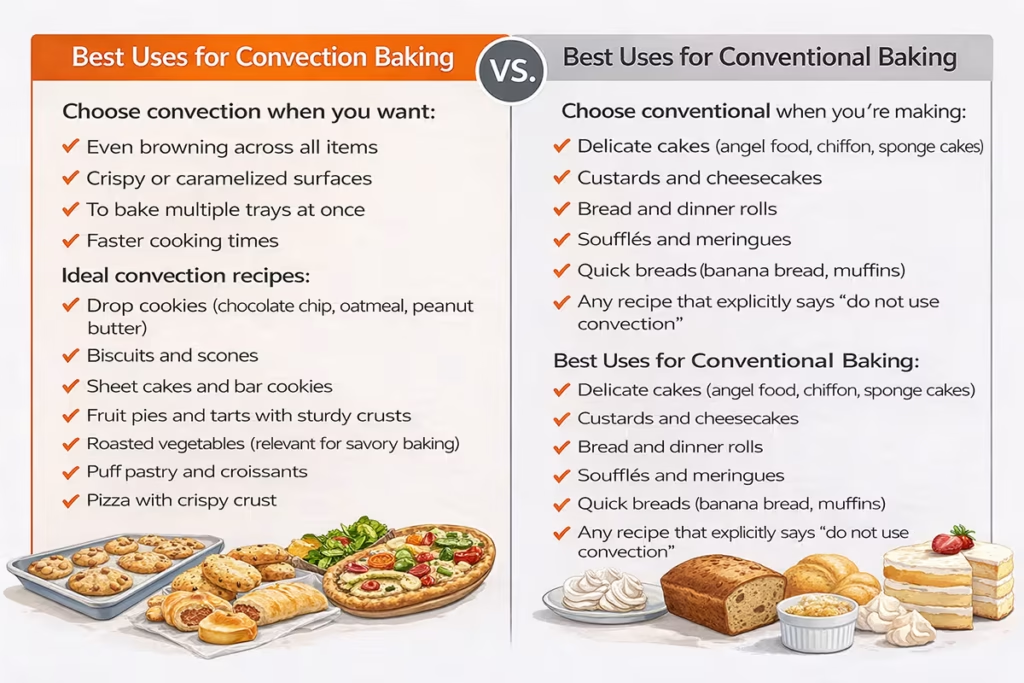
Best Uses for Convection Baking
Choose convection when you want:
- Even browning across all items
- Crispy or caramelized surfaces
- To bake multiple trays at once
- Faster cooking times
Ideal convection recipes:
- Drop cookies (chocolate chip, oatmeal, peanut butter)
- Biscuits and scones
- Sheet cakes and bar cookies
- Fruit pies and tarts with sturdy crusts
- Roasted vegetables (relevant for savory baking)
- Puff pastry and croissants
- Pizza with crispy crust
The circulating air helps cookies spread evenly and develop consistent texture. It also creates excellent rise in pastries by quickly setting the outer layers.
Best Uses for Conventional Baking
Choose conventional when you’re making:
- Delicate cakes (angel food, chiffon, sponge cakes)
- Custards and cheesecakes
- Bread and dinner rolls
- Soufflés and meringues
- Quick breads (banana bread, muffins)
- Any recipe that explicitly says “do not use convection”
These items need gentle, undisturbed heat to rise properly and set their structure. The fan in a convection oven can cause uneven rising, cracked tops, or tilted cakes.
Bread also benefits from conventional heat because it needs a moist environment initially. The fan can dry out the crust too quickly, preventing proper oven spring.
When Either Setting Works
For many everyday bakes, both settings can work well with minor adjustments:
- Cookie bars and brownies
- Simple layer cakes (with adjustments)
- Muffins (though conventional is more forgiving)
- Shortbread and butter cookies
How to Adjust Recipes for Convection Baking
Most recipes you find online or in cookbooks are written for conventional ovens. If you want to use convection instead, you’ll need to make simple adjustments.
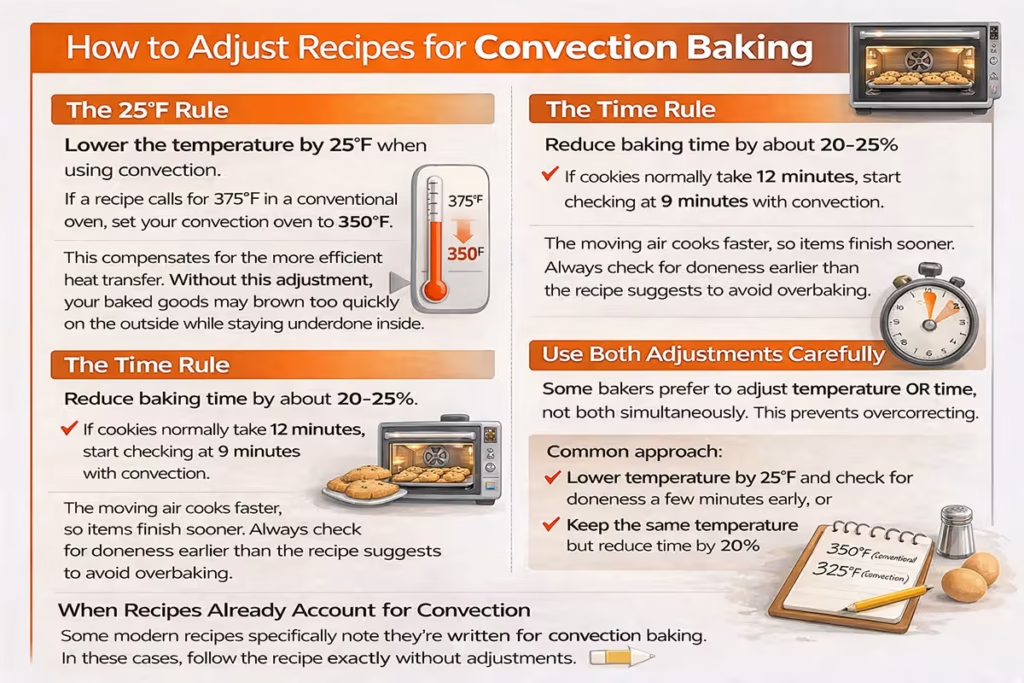
The 25°F Rule
Lower the temperature by 25°F when using convection.
If a recipe calls for 375°F in a conventional oven, set your convection oven to 350°F.
This compensates for the more efficient heat transfer. Without this adjustment, your baked goods may brown too quickly on the outside while staying underdone inside.
The Time Rule
Reduce baking time by about 20-25%.
If cookies normally take 12 minutes, start checking at 9 minutes with convection.
The moving air cooks faster, so items finish sooner. Always check for doneness earlier than the recipe suggests to avoid overbaking.
Use Both Adjustments Carefully
Some bakers prefer to adjust temperature OR time, not both simultaneously. This prevents overcorrecting.
Common approach:
- Lower temperature by 25°F and check for doneness a few minutes early, or
- Keep the same temperature but reduce time by 20%
Experiment to see which method works best for your specific oven and recipes.
When Recipes Already Account for Convection
Some modern recipes specifically note they’re written for convection baking. In these cases, follow the recipe exactly without adjustments.
Look for phrases like:
- “Convection: 325°F”
- “This recipe is optimized for convection”
- Temperature listed as “350°F conventional / 325°F convection”
Common Mistakes and How to Avoid Them
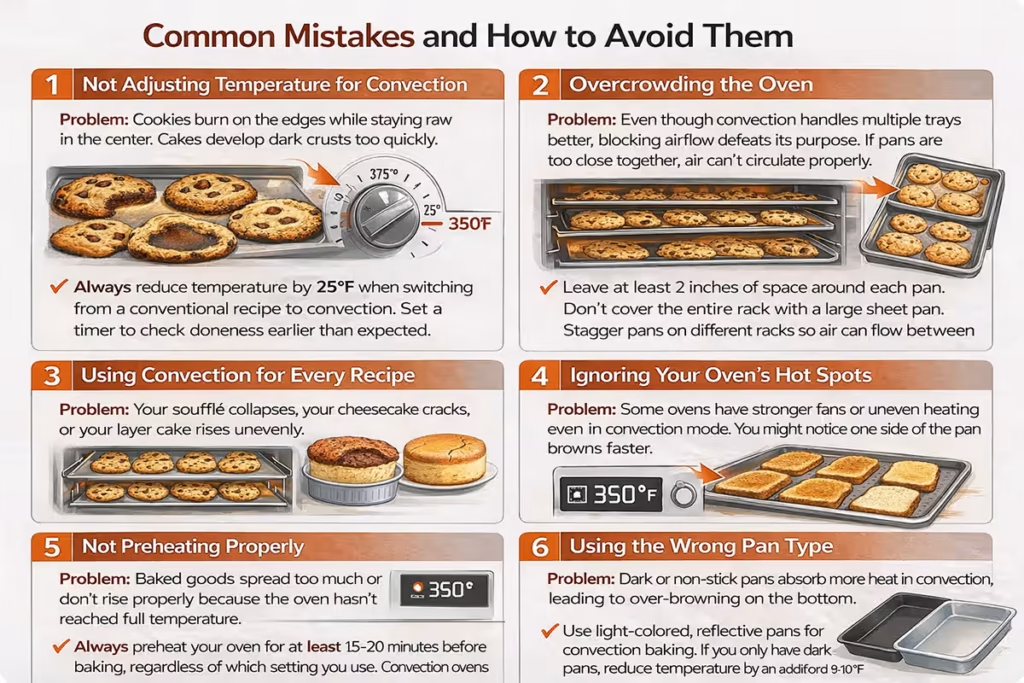
Mistake 1: Not Adjusting Temperature for Convection
The problem: Cookies burn on the edges while staying raw in the center. Cakes develop dark crusts too quickly.
The fix: Always reduce temperature by 25°F when switching from a conventional recipe to convection. Set a timer to check doneness earlier than expected.
Mistake 2: Overcrowding the Oven
The problem: Even though convection handles multiple trays better, blocking airflow defeats its purpose. If pans are too close together, air can’t circulate properly.
The fix: Leave at least 2 inches of space around each pan. Don’t cover the entire rack with a large sheet pan. Stagger pans on different racks so air can flow between them.
Mistake 3: Using Convection for Every Recipe
The problem: Your soufflé collapses, your cheesecake cracks, or your layer cake rises unevenly.
The fix: Stick with conventional for delicate items. The fan can disturb light batters before they’ve set. When in doubt, use conventional for recipes you’ve never made before.
Mistake 4: Ignoring Your Oven’s Hot Spots
The problem: Some ovens have stronger fans or uneven heating even in convection mode. You might notice one side of the pan browns faster.
The fix: Do a toast test. Place bread slices across a baking sheet and bake for a few minutes. See which areas brown fastest. Know your oven’s quirks and compensate by rotating pans if needed (though convection should minimize this).
Mistake 5: Not Preheating Properly
The problem: Baked goods spread too much or don’t rise properly because the oven hasn’t reached full temperature.
The fix: Always preheat your oven for at least 15-20 minutes before baking, regardless of which setting you use. Convection ovens may preheat slightly faster, but don’t skip this step.
Mistake 6: Using the Wrong Pan Type
The problem: Dark or non-stick pans absorb more heat in convection, leading to over-browning on the bottom.
The fix: Use light-colored, reflective pans for convection baking. If you only have dark pans, reduce temperature by an additional 5-10°F or line with parchment paper for insulation.
Tips for Getting the Best Results in Each Oven Type
For Convection Baking Success
Use shallow pans when possible. The moving air works best when it can reach all surfaces easily. Shallow pans for cookies, thin cake layers, and sheet cakes give better results than deep pans.
Don’t cover dishes with foil unnecessarily. Foil blocks airflow, which defeats the purpose of convection. If a recipe calls for covering partway through baking, you might get better results using conventional mode.
Rotate halfway through only if needed. While convection reduces the need for rotation, some ovens still have minor hot spots. Check your bake at the halfway point and rotate if you see uneven browning.
Watch for faster browning. Keep an eye on your baked goods starting at about 75% of the original baking time. Convection can brown surfaces quickly, especially on cookies and pastries.
Take advantage of multiple racks. One of convection’s biggest strengths is even heat distribution between racks. Bake three sheets of cookies at once if your oven allows it, maintaining proper spacing.
For Conventional Baking Success
Use the middle rack as your default. This is where temperature is most stable and predictable. Reserve top and bottom racks for when you specifically need more or less browning.
Rotate pans halfway through. Most conventional ovens have noticeable temperature differences from front to back. Turn your pan 180 degrees at the halfway point for even baking.
Allow extra space between items. Without a fan moving air around, heat transfer is slower. Give cookies and other items a bit more space to ensure heat reaches all sides.
Preheat thoroughly and verify temperature. Conventional ovens can take longer to reach and stabilize at the set temperature. Consider using an oven thermometer to verify accuracy.
Adjust rack position for browning control. Move items up for more top browning (useful for casseroles and pies) or down for more bottom browning (helpful for crispy pizza crusts).
Which Oven Setting Should Beginners Use?
If you’re just starting your baking journey, conventional oven mode is the most forgiving and straightforward option.
Here’s why:
Most recipes online and in books assume conventional baking. You won’t need to do mental math to adjust temperatures or times.
Conventional heat is gentler and more forgiving. If you check your cookies a minute too late, they’re less likely to be overdone compared to the faster-cooking convection mode.
You’ll develop a better feel for baking basics. Learning how your oven behaves without the complication of fan circulation helps build fundamental skills.
When to Start Using Convection
Once you’re comfortable with basic recipes and understand how your oven behaves, experiment with convection for:
- Your go-to cookie recipe (you’ll notice more even browning)
- Sheet pan dinners and roasted vegetables
- Recipes where you’re baking multiple trays at once
Keep notes on what works. Write down your temperature and time adjustments so you can replicate success.
Many Modern Ovens Offer “True Convection”
Some newer ovens have a “True Convection” or “European Convection” setting. This includes a third heating element near the fan, providing even more uniform heat.
If your oven has this feature, it’s often the best option for cookies, pastries, and sheet cakes. The temperature adjustments remain the same (lower by 25°F).
FAQs
Can I use convection for all my baking?
No, not all recipes work well with convection. Delicate cakes, soufflés, custards, and breads typically need conventional heat. The fan can cause uneven rising, cracked tops, or dried-out textures. Stick with conventional for these items and use convection for cookies, pastries, and sturdy cakes where even browning and crisping are desirable.
Why do my cookies spread more in convection?
The fan’s airflow can cause cookies to spread faster before the edges have time to set, especially if your dough is too warm or soft when it goes in the oven. To fix this, chill your cookie dough for at least 30 minutes before baking, reduce temperature by 25°F as recommended, and consider using slightly less butter or adding an extra tablespoon of flour to the dough for structure.
Do I need to preheat longer for convection baking?
Actually, convection ovens often preheat faster than conventional due to the circulating air. Most convection ovens reach temperature in 10-15 minutes versus 15-20 minutes for conventional. However, always allow your oven to fully preheat and consider waiting an extra 5 minutes after the preheat indicator goes off for the most stable baking environment.
Can I convert any conventional recipe to convection?
Most recipes can be converted successfully by lowering temperature 25°F and checking for doneness 20-25% earlier. The exceptions are recipes that rely on very specific rising conditions (like chiffon cakes or bread) or those with loose batters (like popovers). When trying a recipe for the first time, it’s safer to use the method the recipe specifies until you understand how it behaves.
Is convection better for baking multiple trays of cookies at once?
Yes, convection excels at multi-rack baking. The circulating air means all racks receive similar heat, so you can bake three sheets of cookies simultaneously with minimal difference between them. In conventional mode, you’d typically need to rotate pans between racks halfway through, and the top rack would brown faster than the bottom.
Why does my cake dome more in conventional than convection?
Conventional ovens have stronger heat from the bottom, which causes the center of cakes to rise faster and form a dome. Convection’s even heat allows the entire cake to rise more uniformly, typically producing a flatter top. For layer cakes, convection can actually be beneficial as it reduces the need to level domed tops, though delicate cake batters may still perform better with conventional heat.
Conclusion
Understanding the difference between convection and conventional oven settings gives you real control over your baking results.
Conventional ovens provide gentle, predictable heat that’s perfect for delicate cakes, breads, and custards. Convection ovens use circulating air for faster, more even baking that excels with cookies, pastries, and anything where you want crispy, caramelized surfaces.
The key is matching the right oven setting to what you’re making, making simple temperature adjustments (25°F lower for convection), and checking for doneness earlier than recipes suggest.
With these basics, you’re already ahead of most new bakers when it comes to convection vs conventional oven baking. Your cookies will brown evenly, your cakes will rise predictably, and you’ll spend less time wondering why your baking results are inconsistent.
Start with conventional for building your confidence, then experiment with convection once you’re comfortable. Keep notes on what works for your favorite recipes, and soon you’ll know instinctively which setting to choose.






Comments 1