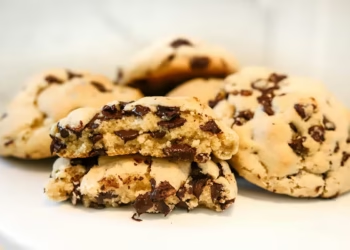

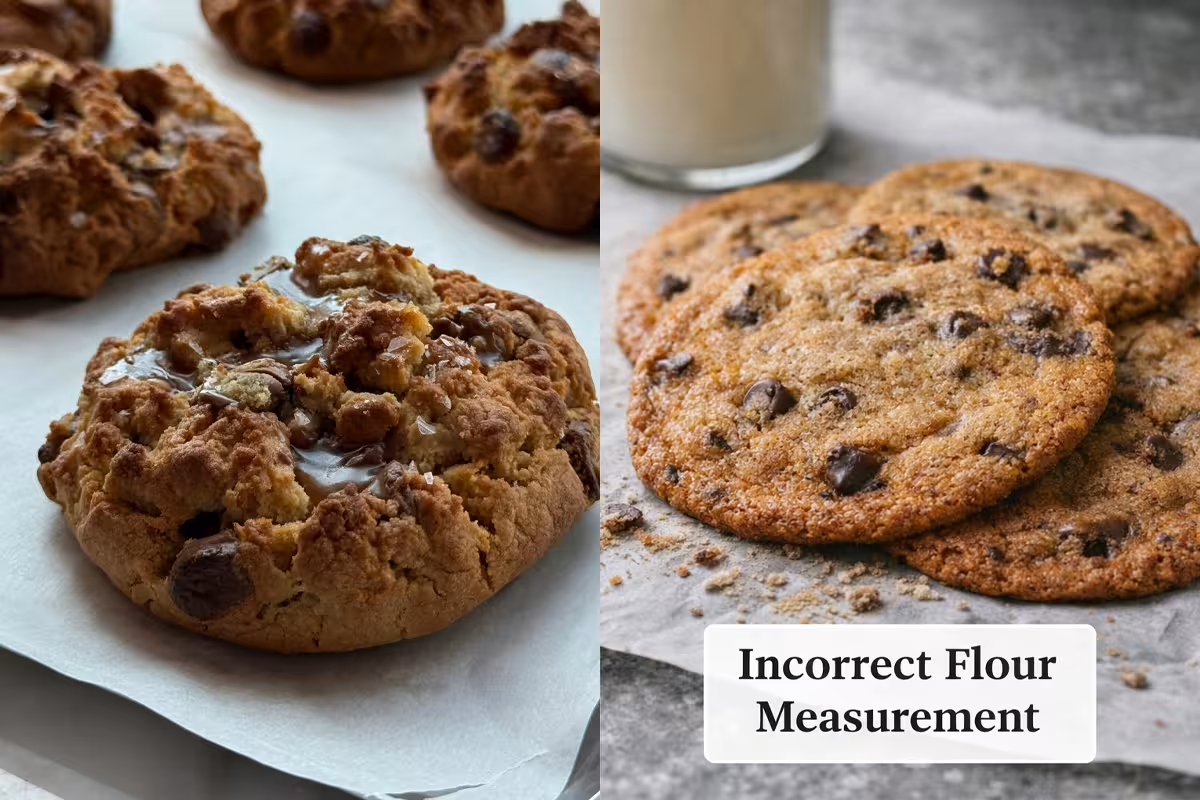
Ever wonder why your cookies turn out perfect one week and flat as pancakes the next? Or why that cake recipe your friend raves about comes out dense and heavy when you make it? Here’s what no one tells you: the problem usually isn’t the recipe. It’s how you’re measuring.
Baking is basically chemistry in your kitchen. When you add flour to cookie dough, you’re adding structure. Add too much, and you get dry, crumbly cookies. Too little, and they spread into thin, greasy puddles. The difference between “these are amazing” and “what went wrong?” often comes down to a tablespoon or two of flour.
This guide will show you exactly how to measure every type of ingredient—flour, sugar, butter, liquids, sticky stuff like honey—so you get consistent results every single time. No more guessing, no more crossed fingers. Just baking that actually works.
Table of Contents
Why Measuring Actually Matters
Look, I get it. Cooking is all about tasting as you go and adjusting on the fly. Baking? Completely different beast.
When you dump flour into a bowl, you’re not just adding powder. You’re adding gluten—the protein that makes dough stretchy and gives structure to your baked goods. Too much gluten development, and your chocolate chip cookies come out tough and cakey instead of soft and chewy. Too little flour overall, and those same cookies turn into one giant flat mess on your baking sheet.
Here’s what happens when measurements go sideways:
Extra flour means dry, dense results. Cookies won’t spread. Cakes turn out heavy.
Not enough flour and everything spreads too thin. Cookies run together. Brownies come out gummy in the middle.
Too much sugar causes excessive browning (or burning) and cookies that spread into puddles.
Wrong liquid amounts throw off the entire texture—too dry and your dough cracks, too wet and nothing sets up properly.
The good news? Once you nail these basic measuring techniques, baking becomes so much more predictable. Same recipe, same results, every time.
If you want to become better at baking you also need to understand the difference between a Convection vs Conventional Oven and when to use which. You can also learn how oven temperature affects the way baked goods turn out.
Volume vs. Weight: What’s the Deal?
Most American recipes tell you to use “1 cup flour” or “2 tablespoons sugar.” That’s volume measuring—you’re measuring how much space the ingredient takes up, not how much it actually weighs.
Problem is, one cup of flour can weigh anywhere from 120 grams to 150 grams depending on how you scoop it. That 30-gram difference is huge in baking.
Weight measuring fixes this. When a recipe says “125 grams flour,” you know exactly what you’re getting. This is why professional bakers weigh everything and why European recipes almost always use grams.
So which should you use?
If you’re following recipes from American food blogs or your grandma’s recipe box, volume measurements work fine—as long as you use the right technique (which I’ll show you).
If you want foolproof consistency, grab a kitchen scale. They cost about $15-20 and eliminate all the guesswork. You’ll never go back.
For this guide, I’m giving you both. All measurements show US units first with metric in parentheses, like this: 1 cup (125g) flour. Use whichever works for you.
Tools You’ll Need
You don’t need a fancy setup. Here’s what actually helps:
Dry measuring cups – A set with 1 cup, ½ cup, ⅓ cup, and ¼ cup. Metal ones last forever.
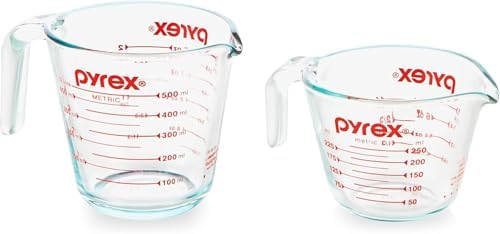
Liquid measuring cup – The clear glass or plastic kind with a spout and measurement lines on the side. Get a 2-cup size.
Measuring spoons – One set with tablespoon, teaspoon, ½ teaspoon, and ¼ teaspoon.
Kitchen scale – Digital is easiest. Look for one that does grams and ounces with a “tare” button (zeros out the bowl weight).
Straight edge – A butter knife works. You’ll use this to level off dry ingredients.
That’s it. Everything else is optional.
Tools That Make Measuring Effortless
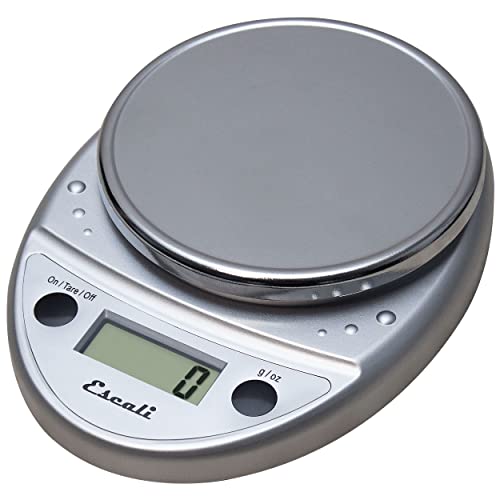
- Escali Primo Digital Kitchen Scale – Affordable, accurate, and switches between grams and ounces with one button.
- OXO Good Grips Measuring Cups – Easy to use, precise measuring cups youwill use regularly.
- Pyrex Glass Measuring Cup Set – Clear markings that don’t fade, microwave-safe for melting butter, and the pour spouts actually don’t drip.
- Spring Chef Magnetic Measuring Spoons – Narrow enough to fit into spice jars, stays together magnetically, and includes useful sizes like ½ tablespoon.


How to Measure Flour (The Right Way)
This is where most people mess up. If you scoop your measuring cup directly into the flour bag, you’re packing way too much flour into that cup. We’re talking 20-30 grams extra per cup—enough to completely change your recipe.
Here’s the technique that actually works:
The Spoon-and-Level Method
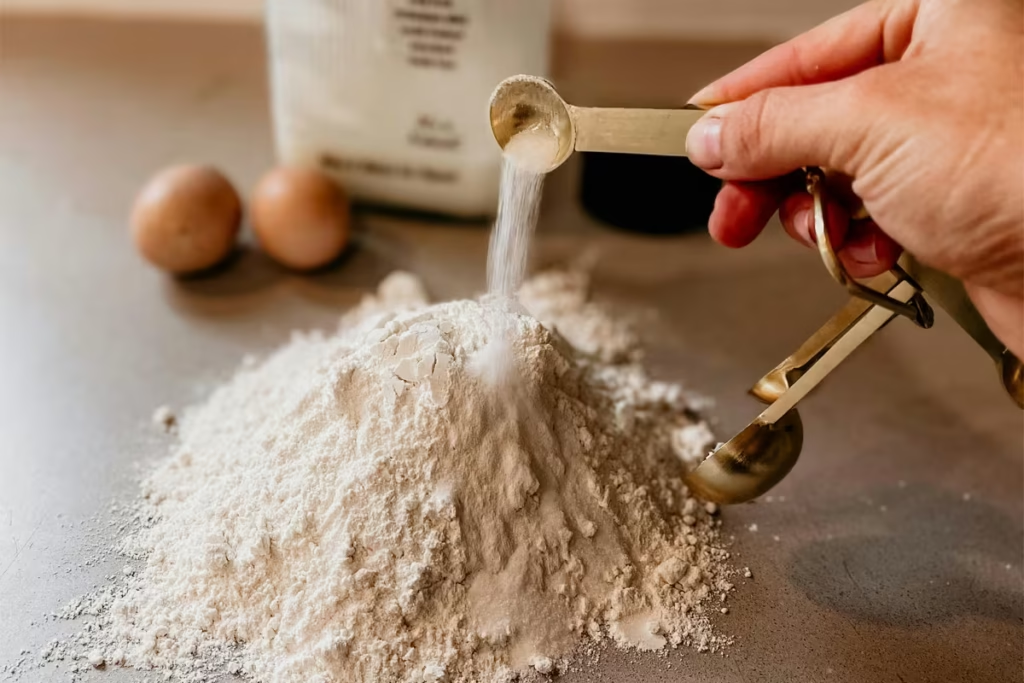
Step 1: Stir up your flour with a spoon or whisk. Flour settles and compacts during storage, so you need to fluff it up first.
Step 2: Spoon the flour into your measuring cup. Don’t scoop with the cup itself. Use a regular spoon to gently transfer flour into the measuring cup until it’s mounded above the rim.
Step 3: Level it off. Run a straight edge (like a butter knife) across the top to sweep away the excess. The flour should be perfectly level with the rim.
Don’t tap the cup. Don’t shake it. Don’t press down. Just spoon, level, done.
Why this works: You’re keeping the flour loose and airy, which gives you the amount recipe developers intended. Scooping compacts it and you end up with way too much.
Using a Scale for Flour
Honestly? This is easier. Place your bowl on the scale, hit the tare button (zeros it out), and add flour until you hit the number you need.
1 cup all-purpose flour = 125 grams
Some people say 120g, some say 130g. I use 125g as a happy medium and it works consistently.
Other flours:
- Bread flour: 1 cup = 130g
- Cake flour: 1 cup = 115g
- Whole wheat: 1 cup = 120g
Measuring Sugar and Other Dry Ingredients
Most dry ingredients follow the same spoon-and-level method as flour. But there’s one big exception.
Granulated Sugar
Same deal as flour. Spoon it into the measuring cup, level it off.
1 cup granulated sugar = 200 grams
Brown Sugar
This one’s different—you actually need to pack it down. Press the sugar firmly into the measuring cup with your fingers or the back of a spoon. It should be compact enough that it holds its shape when you turn the cup over.
1 cup packed brown sugar = 220 grams
If a recipe just says “brown sugar” without specifying packed or unpacked, assume it means packed. That’s the standard.
Powdered Sugar
Powdered sugar is super light and often has lumps. Give it a quick sift or whisk first, then spoon and level.
1 cup powdered sugar = 120 grams (after sifting)
Cocoa Powder
Same as flour—spoon and level. Cocoa clumps easily, so break up any chunks first.
1 cup cocoa powder = 85 grams
How to Measure Liquids
Liquids are more straightforward, but you still need the right technique.
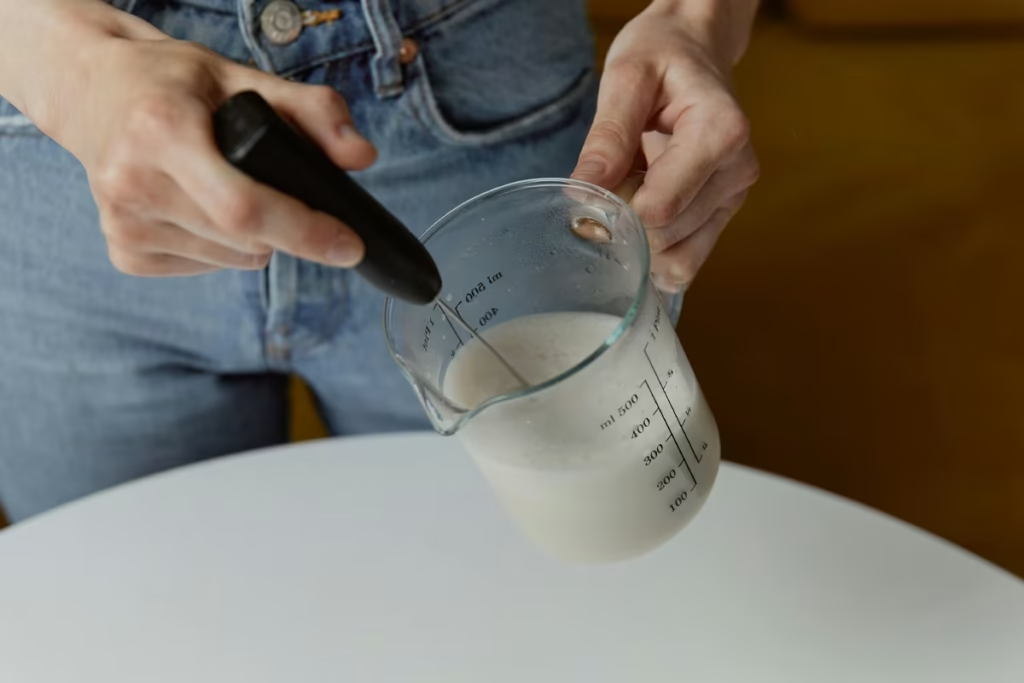
Using a Liquid Measuring Cup
Step 1: Put the measuring cup on a flat surface. Don’t hold it in your hand—you won’t get an accurate reading.
Step 2: Pour in your liquid until it reaches the measurement line you need.
Step 3: Bend down so your eyes are level with the markings. The liquid should hit right at the line, not above or below.
Why you can’t just use dry measuring cups: You can fill them to the brim, but there’s no spout so you’ll spill everywhere. Plus it’s harder to see if you’ve got the exact amount.
For small amounts like vanilla extract (1 teaspoon), just use measuring spoons. Fill to the brim.
Weighing Liquids
Water and milk are easy—they weigh about the same as their volume in milliliters.
1 cup (240ml) milk or water = 240 grams
Oil is lighter:
1 cup (240ml) vegetable oil = 220 grams
Measuring Butter Without Making a Mess
Butter’s actually one of the easiest things to measure if you’re in the US.
Using Stick Butter
Standard butter sticks are pre-marked with tablespoon measurements on the wrapper. One stick is ½ cup or 8 tablespoons.
Just slice through the wrapper at the line you need.
Quick reference:
- 1 stick = ½ cup = 8 tablespoons = 113g
- ½ stick = ¼ cup = 4 tablespoons = 57g
- 2 sticks = 1 cup = 16 tablespoons = 227g
If Your Butter Isn’t Marked
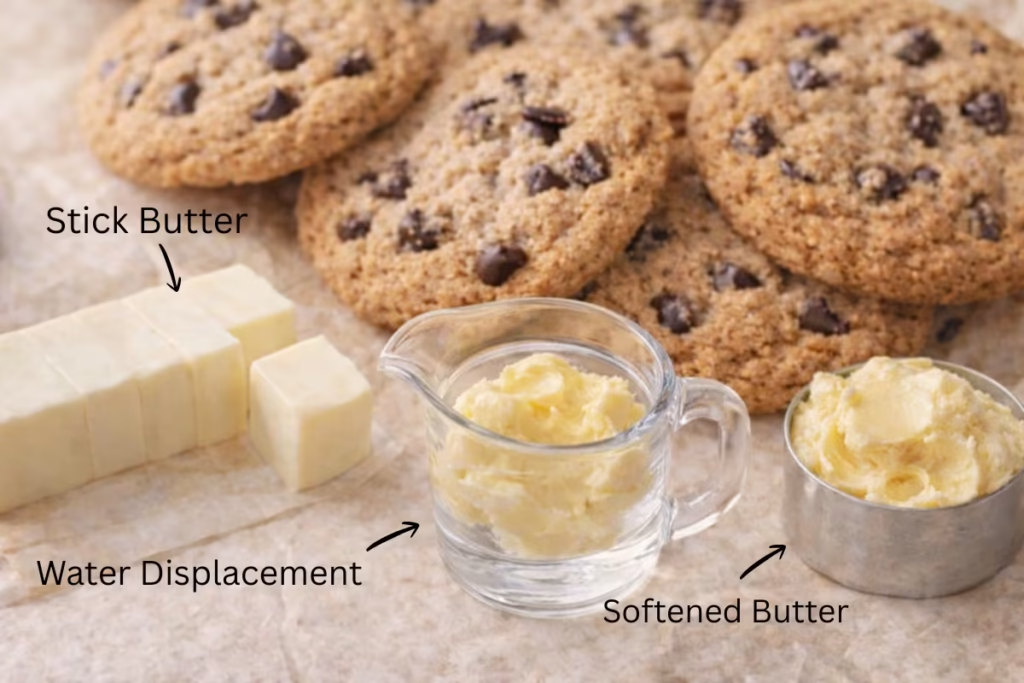
Use the water displacement method. Fill a liquid measuring cup with cold water (let’s say to the ½ cup mark). Add chunks of butter until the water level rises to 1 cup. The difference (½ cup) is how much butter you added. Pour out the water and you’re done.
Softened vs. Melted Butter
Softened butter (room temperature, spreadable): Pack it into a dry measuring cup like you would brown sugar, then level off.
Melted butter: Treat it like any other liquid. Use a liquid measuring cup and check at eye level.
The Scale Method
Easiest option: Tare your bowl, add butter until you hit the weight. One stick is 113g, half a stick is 57g. Done.
Sticky Ingredients Made Easy
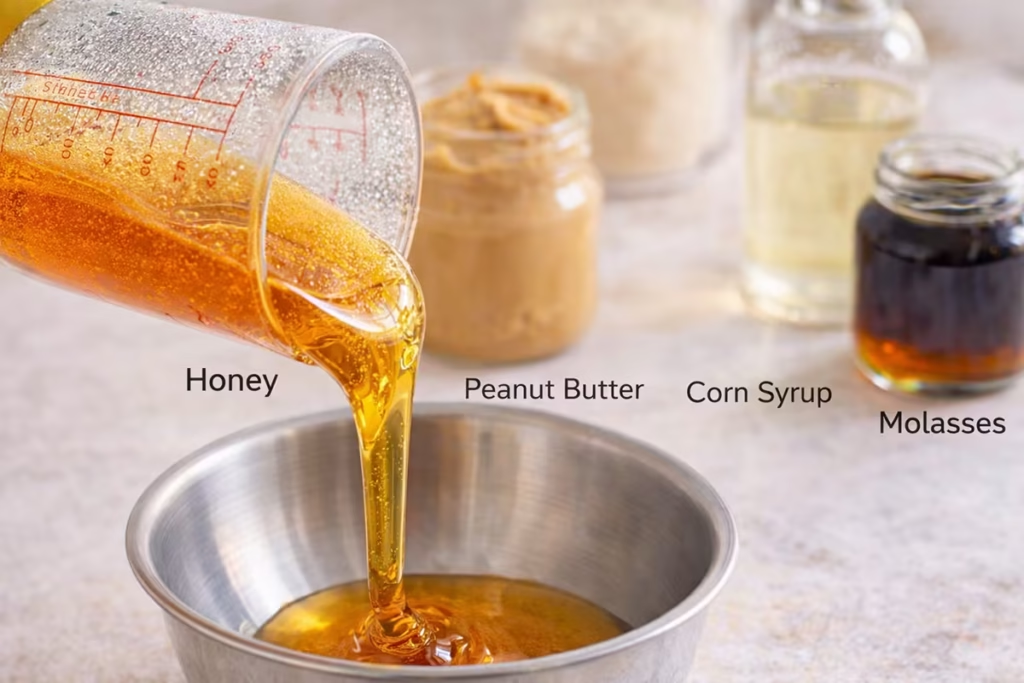
Honey, corn syrup, molasses, peanut butter—these are a pain to measure because they stick to everything.
The Spray Trick
Spray the inside of your measuring cup or spoon with cooking spray before adding the sticky ingredient. It’ll slide right out when you pour or scrape.
You can also rub a tiny bit of neutral oil on the inside of the cup. Same effect.
Just Use a Scale
This is honestly the best way. Put your bowl on the scale, tare it, then squeeze or pour the ingredient directly into the bowl until you reach the weight you need.
No extra dishes, no scraping, no frustration.
Weights for sticky stuff:
- Honey: 1 cup = 340g
- Maple syrup: 1 cup = 320g
- Corn syrup: 1 cup = 340g
- Peanut butter: 1 cup = 250g
Mistakes That Ruin Your Baking
Even if you’ve been baking for years, you might be making one of these mistakes without realizing it.
Scooping flour straight from the bag – This compacts the flour and you end up with way too much. Always spoon and level.
Not leveling off dry ingredients – A heaped cup of sugar can have 50 grams more than a level cup. Always use a straight edge.
Measuring liquids in dry cups – You’ll probably overfill or underfill. Use a proper liquid measuring cup with a spout.
Holding the liquid measuring cup in the air – Set it on the counter and bend down to check at eye level.
Forgetting to tare your scale – If you’re adding multiple ingredients, tare between each one or your measurements will be off.
Confusing tablespoons and teaspoons – Three teaspoons equal one tablespoon. Don’t mix them up.
Using the wrong type of cup – A UK cup is 284ml, not 240ml like a US cup. Stick to whatever measurement system your recipe uses.
Packing flour like brown sugar – Only brown sugar gets packed. Everything else should be loose and airy.
Quick Reference: Ingredient Weight Chart
Keep this handy for when you’re converting recipes or using a scale.
| Ingredients | In Cups | In Grams | Note |
|---|---|---|---|
| All-purpose flour | 1 cup | 125g | Spoon and level |
| Bread flour | 1 cup | 130g | — |
| Cake flour | 1 cup | 115g | — |
| Granulated sugar | 1 cup | 200g | — |
| Brown sugar (packed) | 1 cup | 220g | Pack firmly |
| Powdered sugar | 1 cup | 120g | Sift first |
| Cocoa powder | 1 cup | 85g | — |
| Butter | 1 cup (2 sticks) | 227g | ½ cup = 113g |
| Chocolate chips | 1 cup | 175g | — |
| Honey | 1 cup | 340g | — |
| Milk or water | 1 cup | 240g | — |
| Vegetable oil | 1 cup | 220g | — |
| Large egg | 1 egg | ~50g | No shell |
| Rolled oats | 1 cup | 90g | — |
FAQs About Measuring Baking Ingredients
Do I really need a kitchen scale?
No, but it makes everything easier. You’ll get consistent results every time and there’s zero guesswork. If you bake more than once a month, a $15 digital scale is worth it. That said, if you use proper measuring technique with cups and spoons, you’ll be fine.
What’s the difference between scooping and spooning flour?
Scooping packs the flour into the cup—you can easily add 20-30 grams too much per cup. Spooning keeps it light and airy so you get the right amount. For accurate baking, always spoon flour into the cup and level it off.
Can I measure flour in a liquid measuring cup?
You can, but you shouldn’t. Liquid cups are designed to be filled below the rim so you can see the measurement line without spilling. Dry cups are meant to be filled to the top and leveled. Using the wrong type makes it harder to get precise measurements.
Should brown sugar be packed or loose?
Always packed unless the recipe specifically says otherwise. Press it down firmly with your fingers until it holds its shape when you flip the cup over. This is the standard way to measure brown sugar.
Why do some recipes use grams instead of cups?
Grams are more accurate. A cup of flour can vary by 30 grams depending on how you measure it, but 125 grams is always 125 grams. Professional bakers and European recipes use weight because it’s more consistent. Many American bakers are switching over too.
Does humidity affect how I measure ingredients?
It can. In really humid climates, flour absorbs moisture from the air and becomes slightly heavier. If your baked goods consistently come out dry, try reducing the flour by a tablespoon or two (15-30g). Weighing ingredients helps account for these differences automatically.
You’re Ready to Measure Like You Know What You’re Doing
Getting the measurements right isn’t complicated—you just need the right tools and a little attention to detail. Whether you stick with cups and spoons or invest in a kitchen scale, these techniques will give you consistent, reliable results every time you bake.
Start with one change—maybe switching to the spoon-and-level method for flour, or finally buying that scale you’ve been thinking about—and see how much better your baking turns out. Before you know it, this stuff will be automatic.
Related Posts: If you really want to understand and learn about how baking works, you can do so by reading this article, but before learning and baking at home, we need to be safe and understand the safety precautions for baking at home.