
Baking is equal parts joy and frustration — especially when you’re starting out. You follow the recipe, you do everything it says, and somehow the cake still sinks. The cookies spread into thin, crispy discs. The bread comes out dense as a brick. Sound familiar?
Here’s the thing: most baking disasters aren’t random bad luck. They come from a handful of very fixable mistakes. And once you know what they are, you’ll notice the difference immediately. This guide covers the most common pitfalls that trip up new bakers, why they happen, and exactly how to avoid them going forward.
Table of Contents
Why Baking Mistakes Are So Common (And Not Your Fault)
Unlike cooking, baking is chemistry. Every ingredient plays a specific role — flour provides structure, fat adds tenderness, sugar does far more than just sweeten. When one element is off, even slightly, the whole thing can go sideways.
That’s not a reason to be intimidated, though. It’s actually great news, because it means baking is learnable. Once you understand the “why,” the fixes become obvious. Let’s dig in.
Mistake 1: Not Measuring Ingredients Accurately
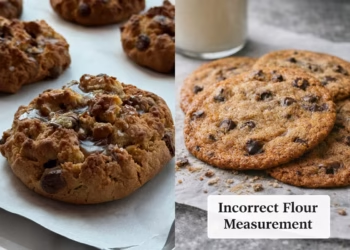
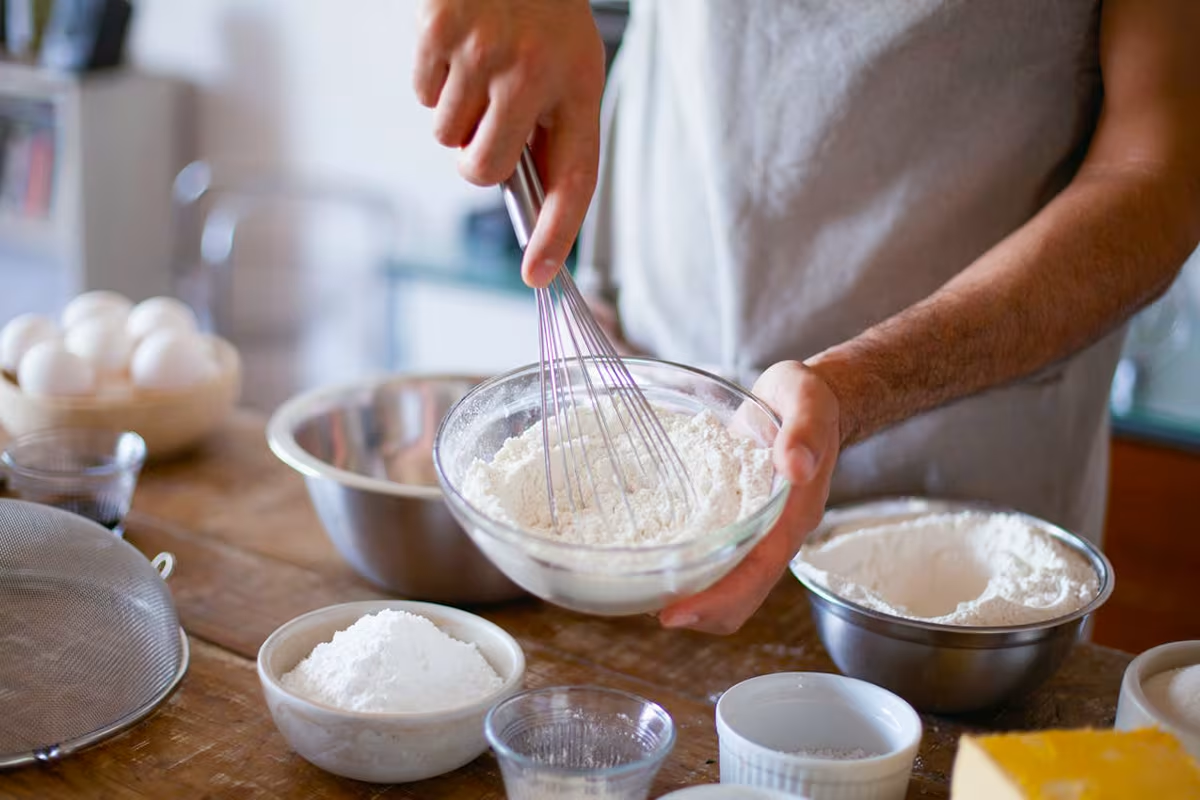
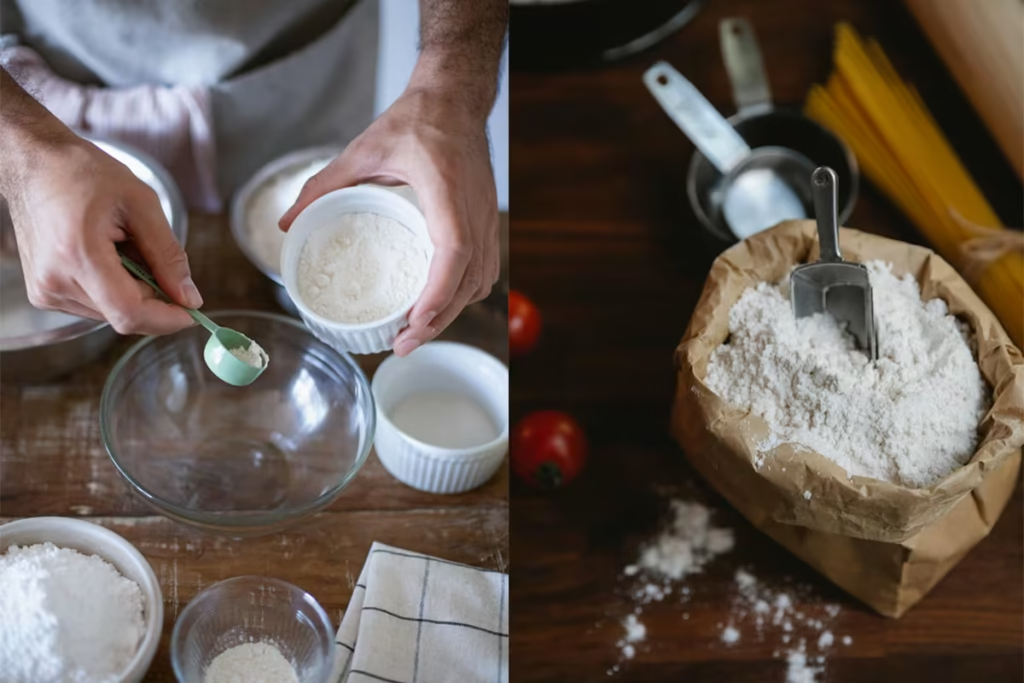
This is the big one. Baking tolerates very little guesswork. Too much flour makes cookies dry and crumbly. Too little makes them spread into puddles. Even a small difference matters.
The most common culprit? Scooping flour straight from the bag with your measuring cup. This packs in up to 20–30% more flour than the recipe intends — and you’d never know just by looking at it.
How to fix it:
- Spoon and level method: Use a spoon to fluff the flour in its container, then spoon it into your measuring cup until it’s heaping, and level it off with a straight edge. Never pack it down.
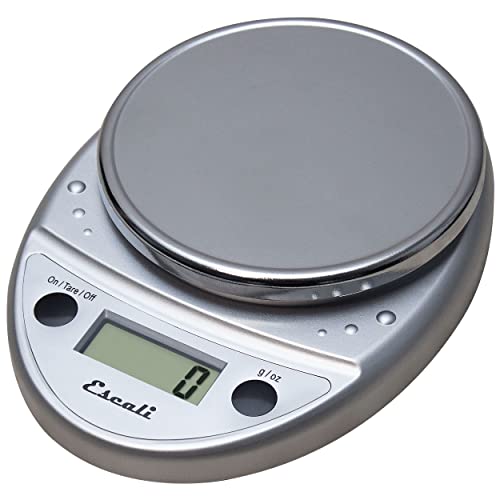
- Use a kitchen scale: This is the most reliable option and will transform your baking overnight. Aim for 1 cup (125g) of all-purpose flour, not 150g or 160g, which is what direct-scooping often gives you.
For liquids, use a liquid measuring cup (the kind with a spout) and check at eye level — angling the cup distorts the reading.
Quick note on measurements: All recipes in this guide use US customary units first, with metric in parentheses. If you have a kitchen scale, use the gram measurements for dry ingredients — they’re simply more precise.
Mistake 2: Ignoring Room Temperature Instructions
When a recipe says “softened butter” or “room temperature eggs,” it’s not just a suggestion. Cold butter won’t cream properly with sugar — and creaming creates tiny air pockets that give cakes their lift. Cold eggs added to a warm batter can cause it to curdle or seize up.
Room temperature in baking generally means around 68–70°F (20–21°C). For butter, you should be able to press a finger into it and leave a dent, but it shouldn’t be greasy or melting.
Quick fixes if you forgot:
- Butter: Cut it into small cubes and let it sit for 20–30 minutes, or microwave on defrost for 5-second intervals — careful not to melt it.
- Eggs: Submerge whole eggs in warm (not hot) water for 5–10 minutes.
- Milk or cream: Microwave briefly, then stir — aim for just below body temperature.
In humid climates like parts of the US South or the UK, “room temperature” can mean warmer than intended in summer. Keep an eye on butter in particular — if it looks shiny or greasy before you even start, it’s too warm.
Mistake 3: Opening the Oven Door Too Early
Wondering why your cake keeps sinking in the middle? This might be why. Every time you open the oven door, the temperature drops — sometimes by as much as 25–50°F (14–28°C). For a cake or soufflé that’s still setting, that sudden temperature shift can collapse the structure before it has a chance to firm up.
The rule of thumb: Don’t open the oven door until you’re at least 75% of the way through the minimum bake time. Use the oven light to check on things instead.
For cookies and breads, this matters a little less — but it’s still a good habit. And if your oven has a glass window that’s fogged up, give it a wipe down before you start baking so you can actually see what’s happening inside.
Mistake 4: Overmixing (or Undermixing) Your Batter
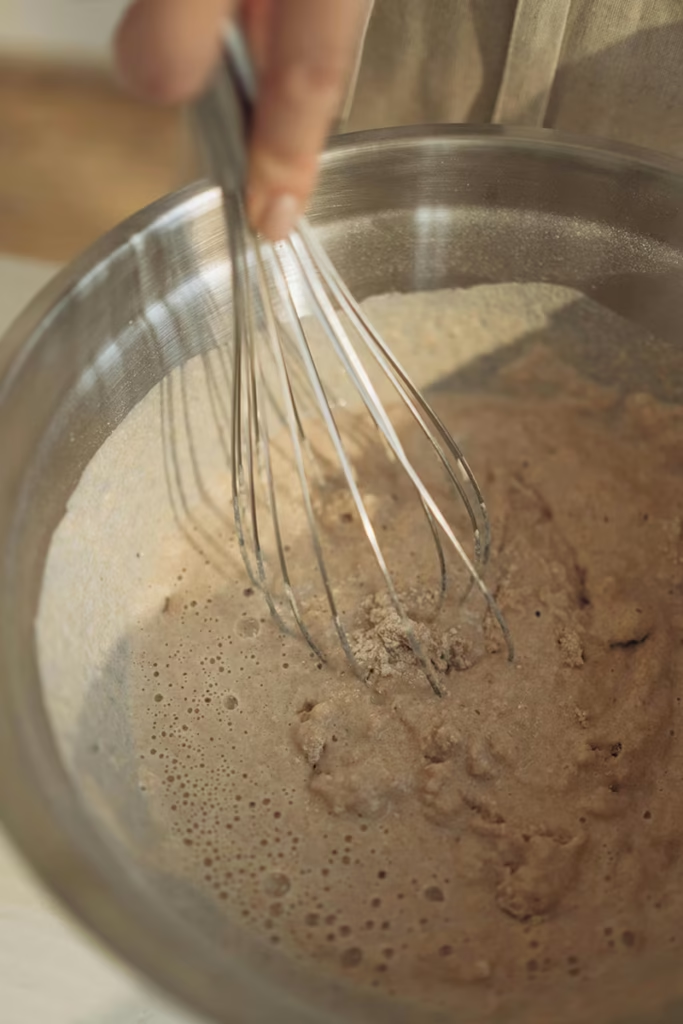
Mixing develops gluten — the protein in flour that gives baked goods their structure. That’s great for bread, which needs it. For cakes, muffins, and pancakes? Not so much.
Overmixing those batters creates too much gluten, which makes them tough and rubbery. Many home bakers find that stopping right when the flour is just incorporated — even if the batter looks a little lumpy — gives them a much more tender result.
Undermixing, on the other hand, leaves pockets of dry flour or unevenly distributed leavening. Your muffins might rise unevenly, or have a raw, floury taste in spots.
The fix: Mix until ingredients are just combined for cakes and quick breads. A few small lumps are fine. For cookies and pastry doughs, follow the recipe closely — creaming time matters because it builds volume.
Mistake 5: Using the Wrong Flour
Not all flour is equal — and swapping one for another without adjusting can seriously throw off your results.
Here’s a quick breakdown:
| Flour Type | Protein Content | Best For |
|---|---|---|
| Cake flour | ~7–9% | Tender cakes, delicate crumb |
| All-purpose flour | ~10–12% | Most baked goods |
| Bread flour | ~12–14% | Yeast breads, chewy bagels |
| Self-rising flour | ~8–9% + leavening | Biscuits, some cakes |
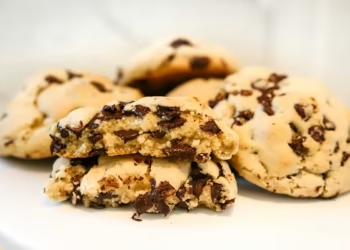
Using bread flour in a chocolate chip cookie makes them chewier and denser. Using cake flour in a bread loaf won’t give you enough structure. Neither is “wrong” in life — just wrong for that recipe.
If you only keep one flour on hand, all-purpose is your best bet. It works reasonably well across the widest range of recipes.
One more note for UK readers: British “plain flour” is roughly equivalent to US all-purpose, and “strong flour” is similar to bread flour. “Self-raising flour” already contains baking powder — don’t add more unless the recipe specifically calls for it.
Mistake 6: Baking at the Wrong Temperature
Oven thermostats lie. It’s one of the most underrated facts in home baking. Many ovens — even newer ones — run 25–50°F (14–28°C) hotter or cooler than the dial suggests. This alone explains a huge number of mysterious baking failures.
- An oven running too hot burns the outside before the inside is done, causes cookies to spread too fast, or gives your cake a domed, cracked top.
- An oven running too cold leads to flat cookies, underbaked centers, and pale crusts that never get that golden color.
The easy fix: Buy an oven thermometer (they cost just a few dollars) and hang it on your rack. Check it before you bake and adjust your dial accordingly. It’s a small investment that pays off every single time you use your oven.
Pro tip: If your oven runs hot and you’ve always compensated by pulling things early, you might actually be underbaking them. The thermometer removes the guesswork entirely.
Mistake 7: Skipping the Preheat
Sliding a cookie sheet into an oven that hasn’t fully come to temperature is a recipe (no pun intended) for flat, greasy cookies. Your oven needs time to heat the walls, the racks, and the air uniformly — just because the temperature indicator lights off doesn’t mean it’s fully stabilized.
Best practice: Preheat for at least 15–20 minutes before putting anything in. If you’re baking on a pizza stone or heavy baking steel, give it 30–45 minutes.
For most cookies and cakes at 350°F (175°C), 15 minutes is plenty. For pizza or rustic breads where you want serious bottom heat, longer is better.
Mistake 8: Not Reading the Recipe All the Way Through First
This one sounds obvious, but it trips up almost every beginner at some point. You get to step 4 and find out the butter needed to be browned in advance. Or the dough needs to chill for 2 hours. Or the cream cheese should be at room temperature — and you’ve already preheated the oven.
Before you do anything else: Read the recipe from top to bottom, including the notes section. Check what needs to be prepped in advance, what needs to come to room temperature, and what equipment you’ll need. Then gather everything before you start.
This approach — called mise en place in professional kitchens — saves you from frantic substitutions or half-finished batters sitting on the counter while you run to the store.
Mistake 9: Substituting Ingredients Without Understanding the Science
Baking is forgiving of some swaps and completely unforgiving of others. Swapping vanilla extract for almond extract? Fine. Swapping butter for oil in a pound cake? The texture will change dramatically. Replacing eggs in a custard with a flax egg? That’s a very different result.
Common substitutions that generally work:
- Buttermilk → Regular milk + 1 tablespoon (15ml) white vinegar or lemon juice per 1 cup (240ml)
- Cake flour → 1 cup (125g) all-purpose flour, remove 2 tablespoons (16g), replace with 2 tablespoons (16g) cornstarch
- Sour cream → Full-fat plain yogurt (1:1 swap)
- Brown sugar → White sugar + 1 teaspoon (4g) molasses per ¼ cup (50g)
Substitutions to be careful with:
- Baking powder vs. baking soda: These are not interchangeable. Baking soda is 3–4x stronger and needs an acid in the recipe to activate. If you substitute, the ratio and recipe chemistry both need adjusting.
- Butter vs. margarine or shortening: These have different fat and water contents that affect spread, texture, and flavor noticeably.
When in doubt, stick to the recipe the first time through. Once you know what the result should look and taste like, you’ll be in a much better position to experiment with swaps.
Mistake 10: Not Letting Things Cool Properly
Pulling a cake out of the pan too soon? It falls apart. Slicing bread straight from the oven? The interior is gummy because the starch hasn’t finished setting. Frosting a warm cake? The icing melts right off.
General cooling guidelines:
- Cakes: Cool in the pan on a wire rack for 10–15 minutes, then turn out and cool completely (at least 1 hour) before frosting.
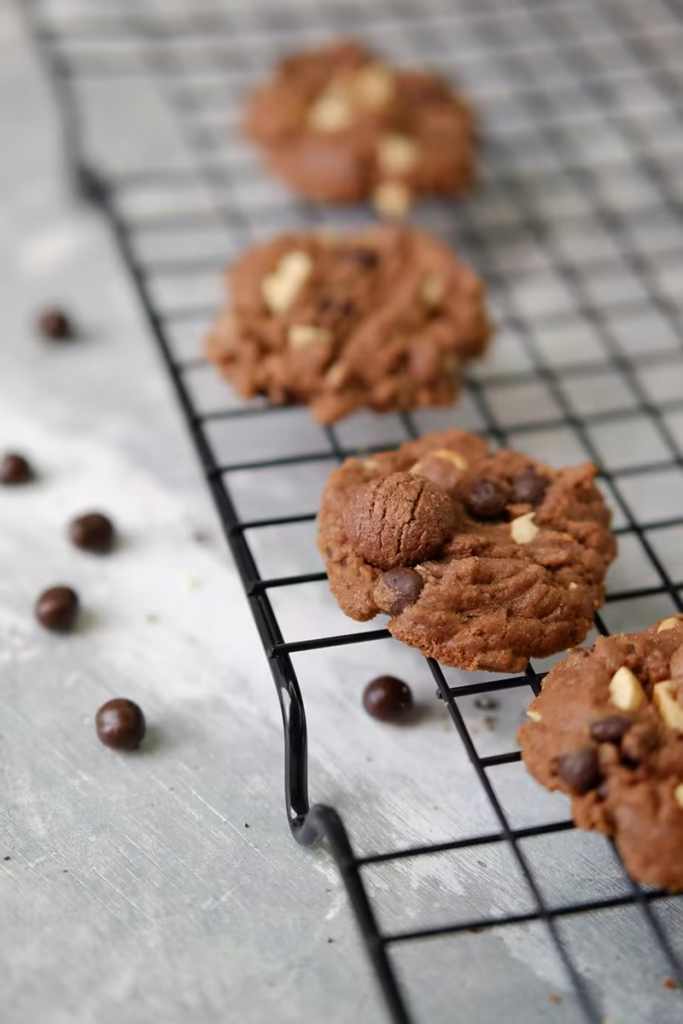
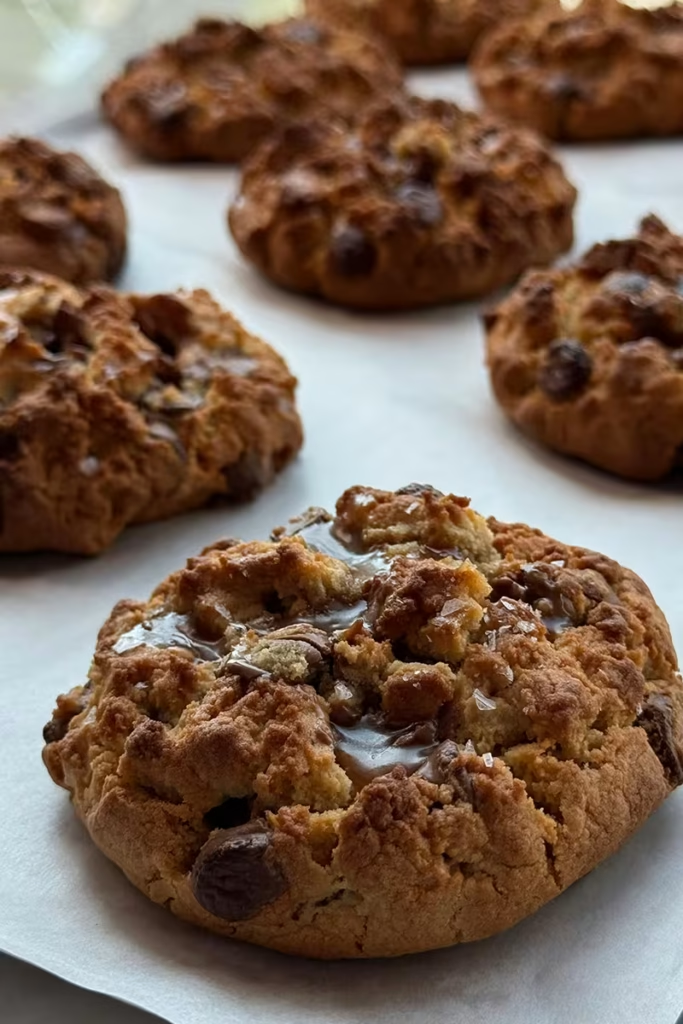
- Cookies: Leave them on the hot pan for 2–5 minutes after baking — they continue to set as they cool. Move to a wire rack after.
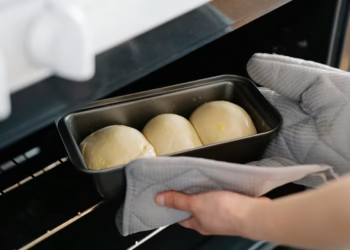
- Bread: Cool on a wire rack for at least 30–60 minutes before cutting. Yes, really. The steam inside is still doing its job.
- Cheesecake: Let it cool to room temperature, then refrigerate for at least 4 hours (overnight is better). Cutting it warm is how you end up with a cracked, soft mess.
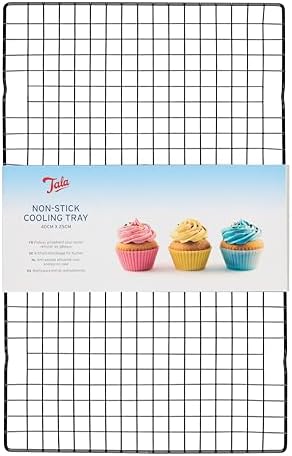
Wire racks matter here — they let air circulate under the baked good so the bottom doesn’t get soggy from condensation.
Quick Troubleshooting Reference
| Problem | Likely Cause | Fix |
|---|---|---|
| Cookies spread too much | Butter too warm, too little flour | Chill dough 30+ mins; check flour measurement |
| Cake sinks in middle | Underbaked, oven door opened early, too much leavening | Use oven thermometer; don’t open door early |
| Muffins are tough/rubbery | Overmixed | Stir until just combined |
| Bread is dense | Under-proofed yeast or too much flour | Check yeast is active; measure flour by weight |
| Burnt bottom, raw inside | Oven too hot, wrong rack position | Lower oven temp; move rack up one level |
| Cake sticks to pan | Pan not greased properly | Grease and flour, or use parchment paper |
| Cookies are dry/crumbly | Too much flour | Spoon-and-level or weigh flour |
FAQs
Why do my cookies always come out flat?
Flat cookies usually mean the butter was too warm (or melted) before baking, or there wasn’t enough flour. Try chilling your dough in the fridge for 30 minutes before baking. Many home bakers find this single step makes a noticeable difference in thickness and texture.
Can I use salted butter instead of unsalted?
Yes, in most recipes — but reduce any added salt by about ¼ teaspoon (1.5g) per ½ cup (113g) of butter. Unsalted butter is preferred because it lets you control the salt level precisely, but salted works in a pinch.
Why does my cake have a dome on top?
A high dome usually means the oven is too hot, which causes the outside to set before the center rises fully, forcing it upward. Try lowering the temperature by 25°F (15°C) and baking a little longer. Cake strips soaked in cold water can also help promote even rising.
My bread didn’t rise — what went wrong?
The most common reasons are dead yeast, water that was too hot (above 110°F/43°C kills yeast), or a kitchen that was too cold for proofing. Always test your yeast by dissolving it in warm water with a pinch of sugar — it should foam within 5–10 minutes. If it doesn’t, start fresh.
Is it okay to open the oven door to check on my cake?
Briefly, and only after about 75% of the minimum bake time has passed. Opening it early — especially in the first half of baking — causes heat to escape and can make cakes collapse in the center. Use your oven light as much as possible instead.
Do I really need a kitchen scale?
You don’t need one, but it’s the single biggest upgrade most beginner bakers can make. A basic digital scale costs around $10–15 and removes the guesswork from dry ingredient measuring entirely. If you bake regularly, it’s worth it.
You’re More Ready Than You Think
Baking has a bit of a reputation for being finicky — and sure, it rewards attention to detail. But that doesn’t mean it has to be stressful. Most of these mistakes are easy to avoid once you know they exist. Get an oven thermometer, learn to measure flour properly, and read your recipe through before you start. Those three habits alone will solve the majority of beginner baking problems.
Every baker — no matter how experienced — has had a flat cake or a burnt batch of cookies. The difference is just knowing what to try next time. Now you do.
Lastly, if you want to be a perfect baker and learn more about baking, you need to understand how to measure baking ingredients accurately. A comprehensive oven temperature guide. The difference between a convection oven and a conventional oven. A complete difference between baking soda and baking powder, and how to use them properly.
🛒 Tools That Make a Real Difference
These are the basics tools that will help you bake with more confidence from day one:
- Escali Primo Digital Kitchen Scale – Affordable, accurate, and switches between grams and ounces with one button.
- OXO Good Grips Measuring Cups – Easy to use, precise measuring cups youwill use regularly.
- Spring Chef Magnetic Measuring Spoons – Narrow enough to fit into spice jars, stays together magnetically, and includes useful sizes like ½ tablespoon.
- Nordic Ware Natural Aluminum Baking Sheets – These have lasted me years without warping; commercial-grade quality.
- Silpat Silicone Baking Mat Set – Nonstick, reusable, and dishwasher-safe; I use mine constantly.
- Non-Stick Cooling Rack – Reusable rack for cooling freshly baked goods.