

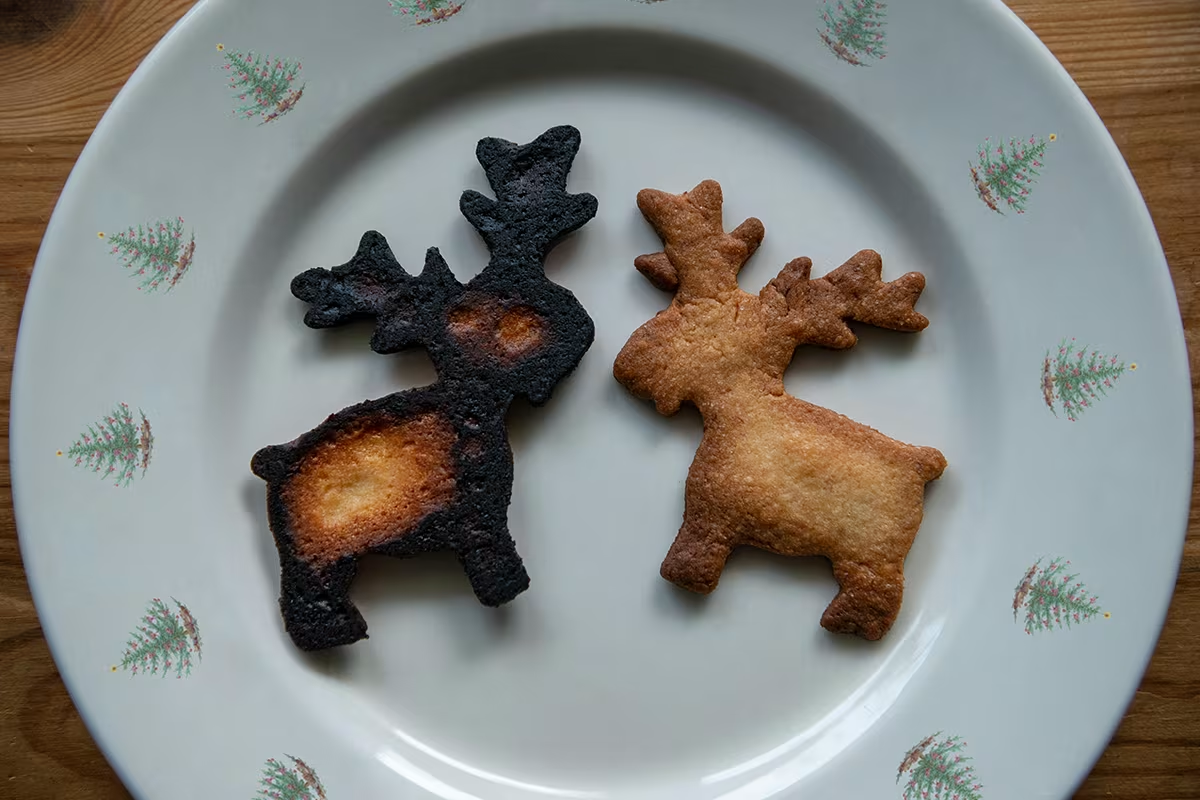
Ever wonder why your cookies turn out differently every time you bake them, even when you follow the same recipe? Or why that beautiful cake recipe you found online came out burnt on the edges but gummy in the middle? The answer usually isn’t the recipe itself—it’s your oven temperature.
Many home bakers do not know that oven dials can be wrong. Even a 25°F (15°C) difference can change chewy cookies into crispy discs. It can also make bread pale instead of golden.
This guide helps you find the right temperature for cookies, cakes, bread, and pizza. It also shows you how to test if your oven is heating correctly. You will also get solutions for common problems. These include uneven baking, burnt bottoms, raw centers, and many more. This way, you can stop guessing and start baking with confidence.
Quick Overview: What You’ll Learn
- Why temperature matters: How heat affects texture, rise, and browning
- Ideal temperatures: Best settings for cookies, cakes, bread, pizza, and more
- Oven quirks: Why your oven might run hot or cold (and how to fix it)
- Testing your oven: Simple ways to check accuracy
- Troubleshooting: Solutions for common baking temperature problems
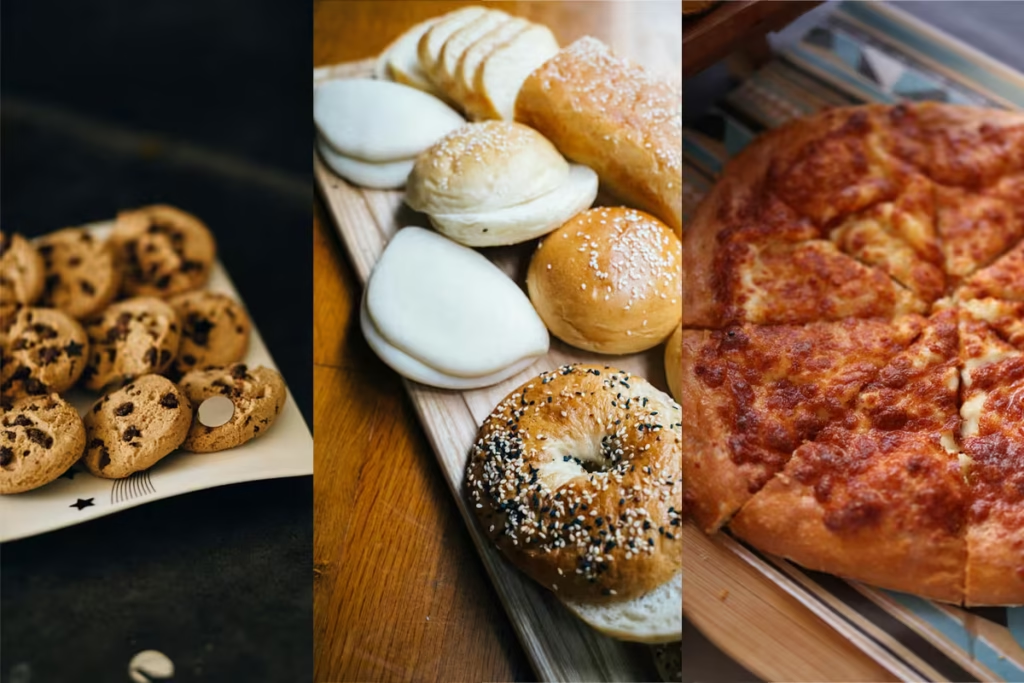
Table of Contents
Why Oven Temperature Matters in Baking
Temperature isn’t just a number on a dial—it’s what controls how your baked goods develop. Here’s what’s happening inside your oven:
Heat drives chemical reactions. When you bake, proteins set, sugars caramelize, and leaveners (like baking soda or yeast) create lift. Each reaction happens at specific temperature ranges. Too cool, and your cake won’t rise properly. Too hot, and the outside burns before the inside cooks.
Texture depends on timing. A cookie baked at 350°F (175°C) spreads slowly and develops chewy centers. Crank it to 400°F (200°C), and the edges set quickly while the middle stays soft—great for some styles, but not all. Bread needs sustained heat to build structure and develop that crispy crust.
Browning is temperature-sensitive. The Maillard reaction (which creates golden-brown color and rich flavor) kicks in around 300°F (150°C). Caramelization of sugars starts around 320°F (160°C). If your oven’s too cool, you’ll get pale, underwhelming results. Too hot, and you’ll get dark spots or burnt edges.
Wondering why your cookies spread too much or your bread stays pale? Temperature inconsistencies are often the culprit. Most home ovens fluctuate by 25-50°F (15-25°C) during a baking cycle, which is why understanding your specific oven makes such a difference.
Understanding Your Oven’s Temperature Sensor
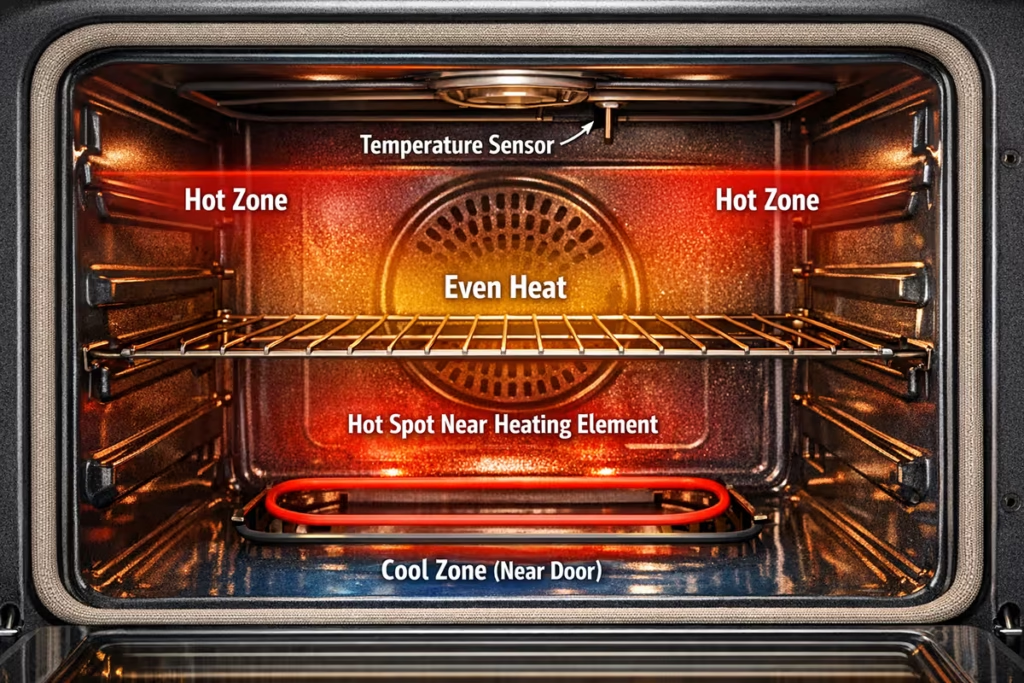
Your oven has a built-in sensor (usually a probe near the back wall or top) that tells the heating elements when to turn on and off. The goal? Maintain the temperature you’ve set. But here’s where things get tricky.
Not all sensors are accurate. Over time, grease and residue can coat sensors or cause them to drift, which leads to misreading the temperature. This means your oven might think it’s at 350°F (175°C) when it’s actually at 325°F (165°C)—or 375°F (190°C).
Heat distribution varies. Even with a working sensor, hot and cool spots exist. The back of the oven near the heating element tends to be hotter, while the front (near the door) is cooler. Convection ovens (with fans) help even this out, but most standard ovens have zones.
Cycling creates fluctuations. When the oven reaches your set temperature, the heating element turns off. As it cools, the element kicks back on. This creates a temperature swing—sometimes 25°F (15°C) or more—during baking. Recipes account for this, but if your sensor’s off, the swings get worse.
What you can do: est your oven regularly with an oven thermometer (more on that below). If your sensor is always off by a certain amount, like 25°F or 15°C too hot, you can adjust the dial to fix it. Some modern ovens let you recalibrate the sensor through settings.
Ideal Oven Temperatures for Different Baked Goods
Different recipes need different heat levels. Here’s a breakdown of the most common baking temperatures and what works best for each type of treat. Use these as guidelines—your specific recipe might tweak them slightly based on ingredients or desired texture.
Cookies: 325°F to 375°F (165°C to 190°C)
- 325-350°F (165-175°C): Best for soft, chewy cookies like chocolate chip or sugar cookies. Lower heat lets them spread slowly and bake evenly without overdoing the edges.
- 375°F (190°C): Good for cookies that need a bit more structure or crispness, like shortbread or biscotti. The higher temp sets the edges faster.
Pro tip: If your oven runs hot, start at 325°F (165°C). Many home bakers find that chilling dough and baking at a slightly lower temp prevents excessive spreading.
Cakes: 325°F to 350°F (165°C to 175°C)
- Standard layer cakes, muffins, cupcakes: 350°F (175°C) is the sweet spot. It gives even rise and a tender crumb without drying out the batter.
- Dense cakes (pound cake, bundt): 325°F (165°C) works better because these need longer baking times. Lower heat prevents the outside from overcooking before the center sets.
- Delicate cakes (angel food, chiffon): Also 325°F (165°C) to avoid deflating the airy structure.
Common mistake: Opening the oven door too early. Cakes are sensitive to temperature drops in the first 20 minutes—wait until at least halfway through before peeking.
Bread: 375°F to 475°F (190°C to 245°C)
Bread is trickier because it often uses two temperatures:
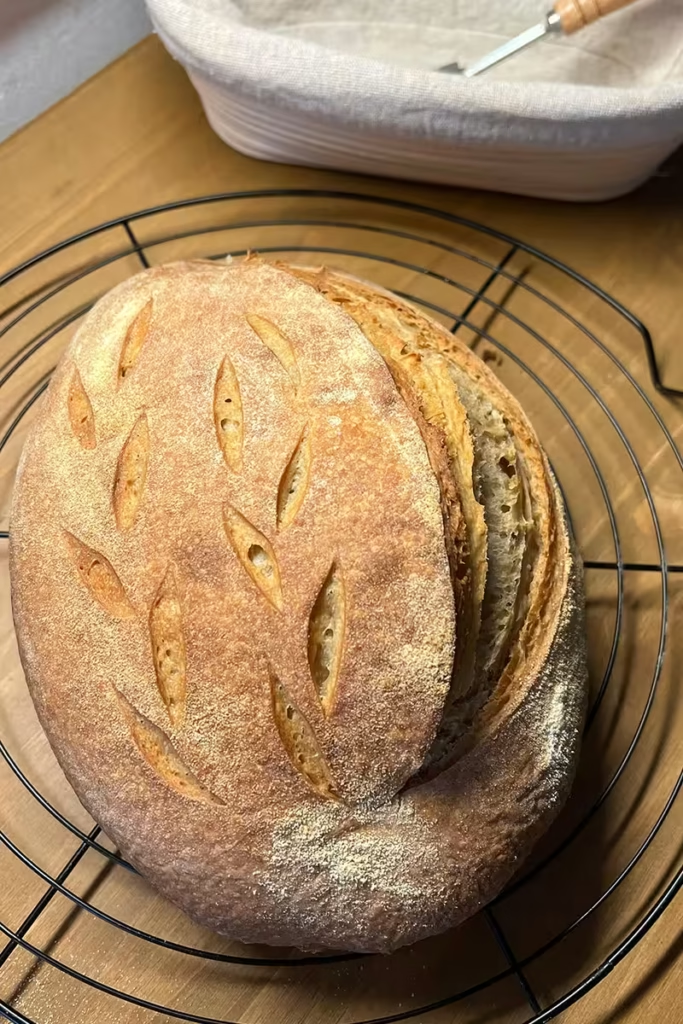
- Artisan loaves like sourdough and crusty bread, should start baking at 450-475°F (230-245°C). Bake them at this high temperature for the first 15-20 minutes. This helps the dough rise quickly and creates a crispy crust. Then reduce to 400-425°F (200-220°C) to finish baking without burning.
- Sandwich bread, dinner rolls: 375-400°F (190-200°C) throughout. These need gentle, even heat for a soft crust and fluffy interior.
- Enriched doughs (brioche, challah): 350-375°F (175-190°C). The added butter and eggs can burn at higher temps.
Key insight: Many bread recipes call for steam in the first few minutes (via a pan of water or ice cubes in the oven). This keeps the crust soft initially, allowing maximum rise before it hardens.
Pastries & Pies: 375°F to 425°F (190°C to 220°C)
- Puff pastry, croissants: 400-425°F (200-220°C). High heat makes the butter steam quickly, creating those flaky layers.
- Pie crusts (blind-baked): 375-400°F (190-200°C). Use pie weights to prevent puffing, and watch for golden edges.
- Fruit pies (with filling): Start at 425°F (220°C) for 15-20 minutes to set the crust, then reduce to 350-375°F (175-190°C) to cook the filling without burning the top.
Brownies & Bars: 325°F to 350°F (165°C to 175°C)
- 350°F (175°C) is standard for most brownie recipes. It gives fudgy centers with set edges.
- 325°F (165°C) if you prefer ultra-fudgy, almost-underbaked brownies—just add a few extra minutes to the baking time.
Quick Breads (Banana Bread, Muffins): 350°F to 375°F (175°C to 190°C)
- 350°F (175°C) for most quick breads. They need gentle heat to rise without drying out.
- 375°F (190°C) for muffins with a domed top—the higher temp creates a quick burst of steam for lift.
The Best Pizza Oven Temperature (And Why It Matters)
Pizza is all about high heat. Commercial pizza ovens can reach 700-900°F (370-480°C), which cooks a Neapolitan pizza in 90 seconds. Your home oven can’t match that, but you can still get great results with the right approach.
Home Oven Pizza: 475°F to 500°F (245°C to 260°C)
Most home ovens max out around 500-550°F (260-290°C), and that’s perfect for pizza. Here’s why you want it as hot as possible:
- Crispy crust: High heat evaporates moisture from the dough quickly, creating that characteristic crunch on the bottom and chew on the inside.
- Quick cooking: A pizza baked at 500°F (260°C) takes 8-12 minutes. Lower temps (like 400°F/200°C) can take 20+ minutes, which dries out the toppings and makes the crust tough.
- Char and flavor: Those little charred spots on the crust (called “leoparding”) come from intense heat. They add a smoky, wood-fired flavor.
How to do it:
- Preheat for at least 30 minutes at 500°F (260°C). Let your oven (and baking surface) get fully saturated with heat.
- Use a pizza stone or steel. These retain heat better than a pan, giving you a crispier bottom. Place it on the lowest rack and preheat it with the oven.
- Bake on the lowest rack. This gets the bottom closest to the heat source (usually on the oven floor), mimicking a pizza oven.
- Watch closely. At 500°F (260°C), pizza can go from perfect to burnt in a minute. Check around 8 minutes—look for bubbling cheese and golden-brown crust edges.
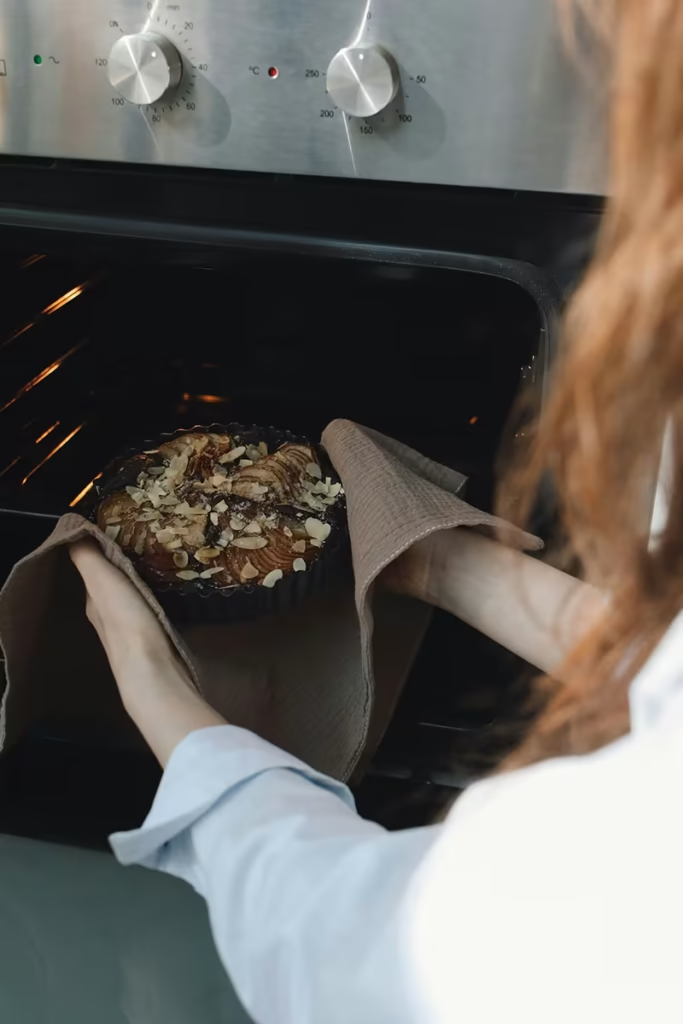
Pizza Oven Temperature for Outdoor Ovens
If you have a dedicated pizza oven (like an Ooni or wood-fired setup), aim for 700-900°F (370-480°C) for Neapolitan-style pizza. At this temp:
- Cook time: 60-90 seconds
- Crust: Blistered and charred with a soft, airy interior
- Technique: You’ll need to rotate the pizza every 20-30 seconds to prevent burning since one side faces the flame.
For outdoor ovens, preheat for 20-30 minutes and use a floured pizza peel to slide the dough in quickly.
Lower-Temp Pizza Options
If you prefer a thicker, bread-like crust (like Sicilian or Detroit-style), you can bake at 425-450°F (220-230°C). These styles need more time (15-20 minutes) to develop structure and cook through the dough fully.
How to Test Your Oven’s Accuracy
Even if your oven says 350°F (175°C), it might not be. Here’s how to check if your oven’s telling the truth—and what to do about it.
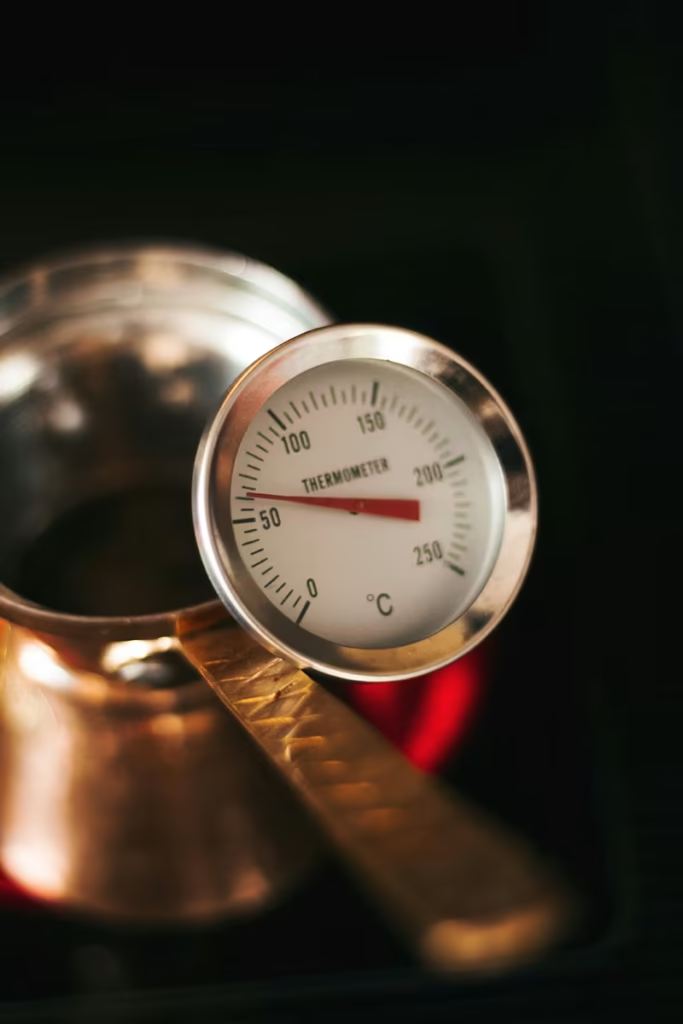
Use an Oven Thermometer
This is the easiest, most reliable method:
- Buy a basic oven thermometer (under $10/£8 at most kitchen stores or online). Avoid digital ones with batteries—they can malfunction at high temps. Go for a dial-style analog thermometer.
- Place it in the center of your oven on a middle rack. Don’t put it directly on the rack bars—hang it or place it on a small oven-safe dish for an accurate reading.
- Preheat your oven to 350°F (175°C) and wait 20 minutes for it to stabilize.
- Check the thermometer without opening the door (use your oven light). Compare the reading to your set temperature.
What you’ll find: If the thermometer reads 325°F (165°C) when you’ve set 350°F (175°C), your oven runs 25°F (15°C) cool. If it reads 375°F (190°C), it runs 25°F (15°C) hot.
How to adjust: Just compensate with your dial. If your oven’s 25°F (15°C) cool, set it to 375°F (190°C) when a recipe calls for 350°F (175°C). Or, check your oven’s manual—some models have a calibration setting you can adjust yourself.
The Sugar Test (Old-School Method)
If you don’t have a thermometer, try this:
- Place 1 tablespoon (15g) of granulated sugar on a piece of aluminum foil on a middle rack.
- Set your oven to 350°F (175°C) and preheat.
- Watch the sugar. It should melt and turn golden-brown around 350-360°F (175-180°C). If it melts quickly (under 10 minutes), your oven’s hot. If it takes 20+ minutes or doesn’t fully melt, it’s running cool.
This method’s less precise, but it’s a quick check if you’re in a pinch.
Check Multiple Spots
Hot and cool zones exist in all ovens. To map them:
- Place 3-4 oven thermometers (or pieces of white bread on a baking sheet—they’ll brown at different rates) in different areas: front left, front right, back left, back right.
- Preheat to 350°F (175°C) for 20 minutes.
- Compare readings (or browning on bread). The back is usually 10-25°F (5-15°C) hotter than the front. Knowing this helps you rotate pans mid-bake for even results.
Common Oven Temperature Problems & Fixes
Even with the right settings, things can go wrong. Here’s how to troubleshoot the most common issues related to oven temperature.
Problem: Baked Goods Are Burnt on the Outside, Raw Inside
Cause: Oven’s too hot, or heat’s uneven. The outside cooks too fast before the center can set.
Fixes:
- Lower your temperature by 25°F (15°C) and increase baking time by 5-10 minutes.
- Use the middle rack. Placing pans too close to the top or bottom heating elements can cause uneven cooking.
- Cover with foil halfway through. If the top’s browning too fast (common with cakes or bread), tent it loosely with aluminum foil to slow surface browning while the inside finishes.
- Check your oven thermometer. It might be running hotter than it displays.
Problem: Pale, Undercooked Tops
Cause: Oven’s too cool, or your oven’s heat source is only at the bottom.
Fixes:
- Raise the temperature by 25°F (15°C).
- Move your pan to a higher rack (upper third) for the last 5 minutes to encourage top browning.
- Use the broiler briefly. For cookies or pies, turn on the broiler (low setting) for 1-2 minutes at the end—but watch like a hawk, as it can burn quickly.
Problem: Cookies Spread Too Much
Cause: Oven’s not hot enough, or the dough’s too warm when it goes in.
Fixes:
- Increase oven temp to 350-375°F (175-190°C) for cookies that need structure.
- Chill your dough for at least 30 minutes before baking. Cold butter spreads slower.
- Preheat your baking sheet. This sets the bottom of cookies faster, reducing spread.
Problem: Bread Doesn’t Rise Properly
Cause: Oven’s too cool during the initial phase, so oven spring (the rapid rise when dough hits heat) doesn’t happen.
Fixes:
- Preheat to a higher temp (450-475°F/230-245°C) for the first 15-20 minutes, then lower it.
- Add steam. Place a metal pan with 1 cup (240ml) of hot water on the bottom rack when you load the bread. The steam keeps the crust soft initially, allowing more rise.
- Check your yeast. If oven temp’s fine but bread still doesn’t rise, your yeast might be old or the dough under-proofed.
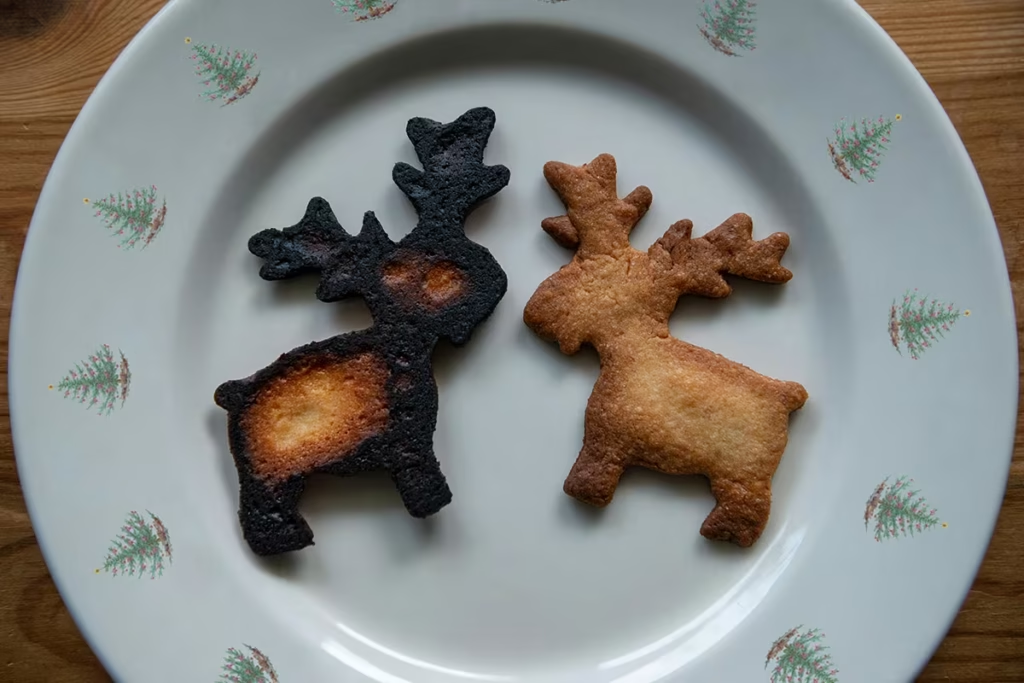
Problem: Uneven Baking (One Side Darker)
Cause: Hot spots in your oven.
Fixes:
- Rotate your pan 180 degrees halfway through baking. If a recipe says 12 minutes, turn the pan at 6 minutes.
- Use light-colored pans. Dark pans absorb more heat and can cause over-browning on the bottom.
- Avoid overcrowding. Leave space around pans for air circulation. Convection ovens handle this better, but standard ovens need room.
Problem: Oven Takes Forever to Preheat
Cause: Weak heating element, or door seal’s leaking heat.
Fixes:
- Check the door seal. If it’s cracked or loose, heat escapes. Replace it (cheap and easy—check your oven’s manual).
- Preheat longer. Some ovens beep when they think they’ve reached temp, but the oven’s not fully saturated. Wait an extra 10 minutes.
- Consider a convection setting if you have it—the fan circulates heat more efficiently.
Tips for Perfect Oven Temperature Control
Now that you know the basics, here are some practical tips to nail oven temperature every single time.
1. Always Preheat Fully
Recipes assume your oven’s at the target temperature when you load the batter or dough. Preheating for at least 15-20 minutes (30 for pizza or bread) ensures the oven walls, racks, and air are all at temp. If you skip this, your bake times will be off and results inconsistent.
2. Invest in an Oven Thermometer
This is non-negotiable if you bake regularly. It costs less than a bag of flour and saves countless failed batches. Keep it in your oven permanently so you always know the real temperature.
3. Know Your Oven’s Quirks
Spend a weekend testing your oven (see above). Once you know it runs 25°F (15°C) hot or has a cool spot on the left, you can adjust every recipe accordingly. Write it down and tape it inside a cabinet door for reference.
4. Use the Right Rack Position
- Bottom third: Best for pizza, crusty bread, anything needing a crispy bottom.
- Middle rack: Standard for cakes, cookies, muffins—most even heat.
- Top third: For browning tops of casseroles or finishing gratins under the broiler.
5. Don’t Crowd the Oven
Baking three sheet pans of cookies at once? Your oven can’t circulate heat properly, and the bottom pan will underbake. Bake in batches, or rotate pans every 5 minutes if you must do multiples.
6. Rotate for Even Baking
Even in a perfect oven, rotating pans halfway through improves evenness. It’s especially important for cakes, which can dome unevenly if one side gets more heat.
7. Adjust for Convection
If using a convection oven (with a fan), reduce the recipe temperature by 25°F (15°C). The fan circulates heat more efficiently, so 350°F (175°C) in a standard oven = 325°F (165°C) in convection. Also, check baked goods 5 minutes earlier than the recipe suggests—they cook faster.
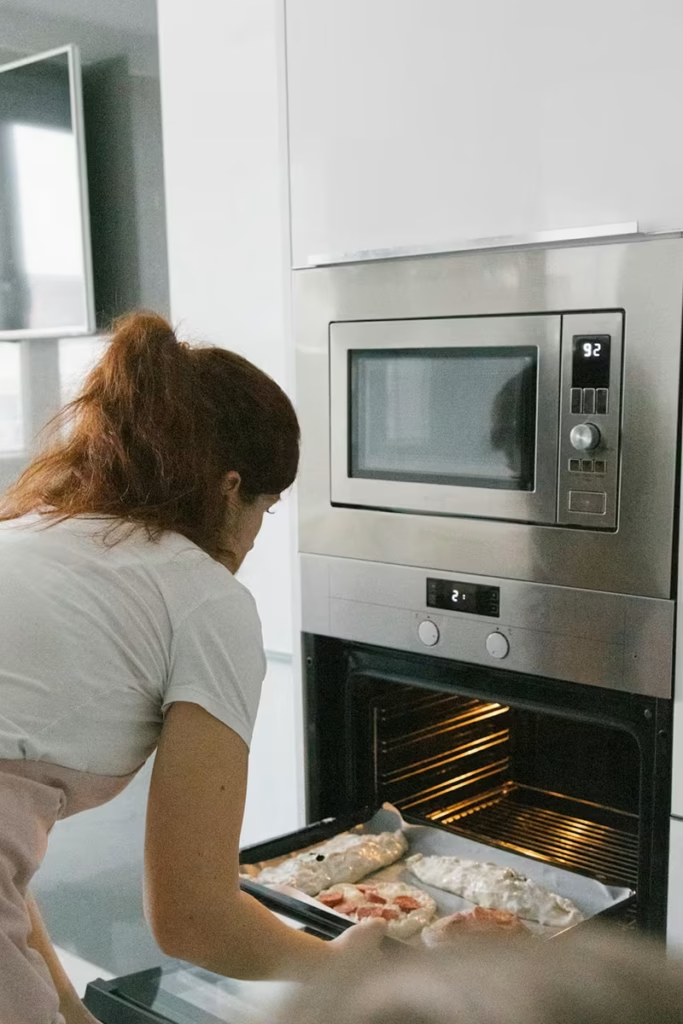
8. Let Your Oven Rest Between Batches
If you’re baking multiple batches back-to-back (like cookies), give your oven 5-10 minutes between loads to return to the set temperature. Loading a new pan drops the temp temporarily, which can affect spreading or rise.
9. Use Light or Dark Pans Wisely
- Light-colored aluminum pans: Reflect heat, good for delicate bakes like cakes or cookies that might over-brown.
- Dark nonstick pans: Absorb heat, great for pizza or bread crusts. But reduce oven temp by 25°F (15°C) if a recipe calls for light pans, or you’ll get overly dark bottoms.
10. Keep the Door Closed
Every time you open the oven, the temp drops 25-50°F (15-25°C). For cakes and soufflés, this can cause collapse. Use the oven light and window to check progress, and only open when necessary (like rotating pans).
FAQs
What oven temperature should I use for cookies?
Most cookies bake best at 350°F (175°C), which gives chewy centers and golden edges. For crispier cookies or shortbread, try 375°F (190°C). If your oven runs hot or cookies spread too much, lower it to 325°F (165°C) and chill your dough before baking.
How do I know if my oven temperature sensor is accurate?
Use an oven thermometer. Preheat your oven to 350°F (175°C), wait 20 minutes, then check the thermometer reading. If it’s off by more than 10°F (5°C), your sensor may need recalibration (check your manual) or you can simply adjust the dial to compensate when baking.
What’s the best pizza oven temperature for a home oven?
Set your oven to its maximum—usually 500-550°F (260-290°C). Preheat for at least 30 minutes with a pizza stone or steel on the lowest rack. Bake pizza for 8-12 minutes on the lowest rack for a crispy crust and bubbling cheese. Commercial pizza ovens reach 700-900°F (370-480°C), but home ovens do great at max temp.
Why does my oven temperature fluctuate during baking?
All ovens cycle their heating elements on and off to maintain the set temperature, causing swings of 25-50°F (15-25°C). This is normal. However, if fluctuations are extreme (75°F+/40°C+), your sensor might be faulty, or the door seal could be leaking heat. Check both and consider recalibration or repair.
Should I lower the temperature for convection ovens?
Yes. Reduce the recipe temperature by 25°F (15°C) when using convection. The fan circulates heat more efficiently, so 350°F (175°C) standard = 325°F (165°C) convection. Also, check baked goods 5 minutes earlier than the recipe suggests, as convection cooks faster.
What temperature should I bake bread at?
Artisan breads with crispy crusts start at 450-475°F (230-245°C) for the first 15-20 minutes, then reduce to 400-425°F (200-220°C) to finish. Soft sandwich breads bake at 375-400°F (190-200°C) throughout. Enriched doughs (like brioche) need 350-375°F (175-190°C) to avoid burning the butter and eggs.
How can I fix an oven that runs too hot or too cold?
First, confirm the issue with an oven thermometer. If it’s consistently off by a set amount (like 25°F/15°C), adjust the dial when baking—no repairs needed. For larger discrepancies (50°F+/25°C+), check your manual for recalibration instructions or call a technician. Also inspect the door seal for leaks.
Conclusion
Getting oven temperature right is one of the simplest ways to improve your baking overnight. Whether you’re making chewy chocolate chip cookies at 350°F (175°C), crispy-crust pizza at 500°F (260°C), or artisan bread with a high-heat start, knowing how your oven behaves—and adjusting for it—makes all the difference.
Start by testing your oven with a thermometer, learn its quirks, and don’t be afraid to tweak temperatures based on what you see. With these tips, you’ll troubleshoot issues faster, bake more consistently, and stop second-guessing yourself every time a recipe says “preheat to 350°F.”
You’ve got this! Happy baking, and may all your crusts be golden and your centers perfectly set.





Comments 1