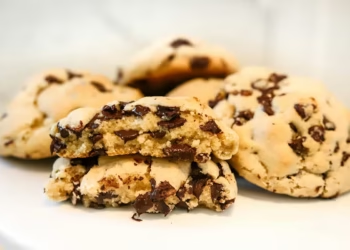


You slide your cookie tray into the oven, set the timer, and come back 12 minutes later expecting beautiful, rounded cookies — only to find a flat, greasy puddle situation staring back at you. Sound familiar? You’re not alone. Flat, spreading cookies are one of the most common baking complaints home bakers face, and the good news is that the fix is almost always simple once you understand what went wrong.
This guide breaks down exactly why cookies spread in the oven, walks you through each cause, and gives you clear, practical steps to prevent it. Whether this is your first batch or your fifth frustrating attempt, you’re in the right place.
Table of Contents
Quick Answer: Why Do Cookies Spread?
Cookies spread because something in the dough — usually the butter, sugar ratio, or flour amount — causes them to melt and flatten before the edges have time to set in the oven. The most frequent culprits are warm butter or dough, not enough flour, too much sugar, excess leavening, and low oven temperature. Fixing one or two of these is usually all it takes.

The Science Behind Cookie Spreading
Here’s the thing — every ingredient in a cookie dough has a job. When they’re balanced correctly, the cookie holds its shape just long enough to set in the heat. When something’s off, the dough melts too fast before the structure can firm up.
Think of it like a race. The butter and sugar want to melt and spread outward. The flour and eggs want to build structure and set the shape. If the “melting” side wins too quickly — because the butter was too warm, or there wasn’t enough flour — you end up with a flat cookie.
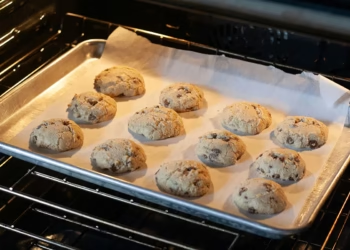
Baking temperature plays a huge role too. A properly hot oven (typically 350–375°F / 175–190°C for most cookie recipes) allows the edges to firm up almost immediately when the dough hits the heat. Too low a temperature and the dough spends too long in a molten state, spreading sideways instead of puffing up.
Understanding this balance is what separates a frustrated baker from a confident one.
The Most Common Reasons Cookies Spread Too Much
1. The Butter Was Too Soft (or Melted)
This is probably the number one cause of flat cookies. Butter that’s overly soft or fully melted doesn’t hold air well when creamed with sugar, and it starts to liquefy the moment the oven heats up. The result? Cookies that race to the edge of the pan before they’ve had a chance to puff.
What proper butter looks like: Cool room-temperature butter should leave a slight indent when pressed with your finger but still hold its shape. If it’s shiny, greasy, or slides around easily, it’s too warm.
2. Not Enough Flour
Flour is what gives cookie dough its backbone. It contains gluten — the stretchy protein network that holds everything together — and it absorbs moisture during mixing. Too little flour means there’s not enough structure to counterbalance all that butter and sugar, so the dough just… spreads.
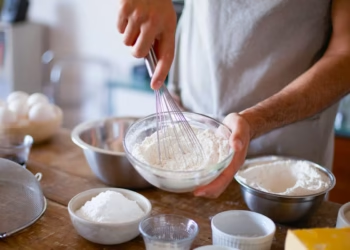
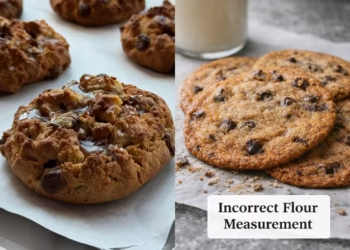
A very common mistake here is measuring flour incorrectly. Scooping directly from the bag with a measuring cup packs the flour in, which can actually over-measure by up to 20%. The safer method is to spoon flour into the cup and level off the top. Better still, use a kitchen scale — it removes all the guesswork.
3. Dough That’s Too Warm Before Baking
Even if you start with butter at the right temperature, by the time you’ve mixed the dough, scooped it, and placed it on the pan, the fat may have warmed back up — especially in a warm kitchen. Warm dough spreads faster than it sets.
Many home bakers find that chilling the dough for at least 30 minutes (or even overnight) makes a significant difference. The fats solidify again, and the flour has time to absorb moisture fully. The result is a cookie that holds its shape better and often has more flavor too.
4. Too Much Sugar or the Wrong Type
Sugar isn’t just for sweetness — it’s deeply involved in cookie texture and spread. It’s actually classified as a liquid ingredient in baking because it dissolves and flows when heated.
Here’s the breakdown:
- White (granulated) sugar encourages spread and crispness because it dissolves quickly and holds less moisture.
- Brown sugar absorbs moisture from the air, produces chewier cookies, and tends to spread slightly less.
If you’ve swapped out sugar types without adjusting the rest of the recipe, that could easily explain why your cookies spread.
5. Too Much Baking Soda
Baking soda is a leavener that helps cookies expand — it’s useful in the right amount. But if you add too much, it creates a gas reaction that’s too aggressive, causing cookies to expand and flatten rather than rise nicely. Always measure baking soda precisely; a slight excess can be enough to cause noticeable spreading.
6. Oven Temperature Is Too Low
Even if your oven says it’s at 350°F (175°C), it might not be. Many home ovens run 25–50°F (15–30°C) cooler than the dial suggests — this is surprisingly common. When the temperature is too low, cookies spend too long in the soft, melting phase before the edges begin to set, giving them plenty of time to spread outward.

Ingredients That Affect Cookie Spread
| Ingredient | Role in Spreading | Tip |
|---|---|---|
| Butter (too soft) | Increases spread | Use cool room-temp butter; chill dough if needed |
| White sugar | Increases spread | Balance with brown sugar for less spread |
| Brown sugar | Slightly reduces spread | Higher ratio = chewier, thicker cookies |
| Flour (too little) | Increases spread | Weigh flour or spoon-and-level carefully |
| Baking soda | Increases spread if excess | Measure precisely; level off with a straight edge |
| Eggs (too large) | Can increase spread | Use large eggs only; extra liquid loosens dough |
| Oven temp (too low) | Increases spread | Verify with an oven thermometer |
How to Stop Cookies from Spreading
Here are the most reliable fixes, in order of how often they solve the problem:
1. Chill the dough. Even 30 minutes in the fridge helps significantly. Overnight chilling produces the best results for both shape and flavor. If you’re short on time, 15–20 minutes in the freezer works too.
2. Measure your flour properly. Spoon flour into the measuring cup, don’t scoop. Or — even better — weigh it. 1 cup of all-purpose flour = 125g. This single habit eliminates one of the most common baking errors.
3. Use cool room-temperature butter. Pull butter from the fridge about 30–45 minutes before baking in a normal kitchen. In a warm kitchen (like a summer kitchen or in humid climates), 15–20 minutes may be enough.
4. Check your oven temperature. An inexpensive oven thermometer is one of the best investments a home baker can make. Place it on the middle rack before preheating and compare the reading to your dial. If there’s a gap, adjust your dial accordingly.
5. Bake on a cool, lined pan. If you’re doing multiple batches, let the baking sheet cool fully between trays. A hot pan from the last batch will start melting the dough before it even goes in the oven. A silicone baking mat or parchment paper also helps cookies release cleanly without excess grease.
6. Add 1–2 tablespoons (8–16g) more flour if the dough looks wet or greasy. If you’ve already made the dough and it seems too loose, a small addition of flour can tighten things up.

Tips for Thick, Chewy Cookies
If you specifically want cookies that are thick and chewy (rather than thin and crispy), here are a few extra strategies:
- Use more brown sugar than white. A ratio of roughly 2:1 brown to white sugar produces a chewier, thicker result. Brown sugar’s molasses content attracts moisture, which keeps cookies soft and reduces spread.
- Use bread flour instead of all-purpose. Bread flour has a slightly higher protein content, which builds more gluten and produces a chewier texture with less spread. Swap 1:1 to start.
- Don’t over-cream the butter and sugar. Over-creaming incorporates too much air, which can lead to excessive puffing followed by collapse during baking. Mix until just combined once you add the flour.
- Under-bake slightly. Pull cookies from the oven when the edges look set but the centers still appear underdone. They’ll firm up as they cool on the pan — this is called carryover baking.
- Scoop and chill. Shape the dough balls first, then refrigerate them on the sheet before baking. This is especially useful when your dough has warmed up during mixing.
Common Cookie Problems and Quick Fixes
If cookies spread into thin, greasy puddles: → Butter was likely too warm, or too much butter was used. Chill dough before baking next time, and double-check your measurements.
If cookies spread on the edges but stay doughy in the center: → Oven temperature is probably too high. The edges set too fast while the center stays raw. Try dropping the temperature by 25°F (15°C) and baking a minute or two longer.
If cookies look perfect in the oven but deflate after cooling: → Often caused by too much leavening (baking soda/powder). The gas bubbles expand in heat, then collapse. Measure carefully.
If only some cookies spread but others don’t from the same batch: → Check if the baking sheet was hot from a previous batch, or if some dough balls were larger than others. A cookie scoop helps keep portions uniform.
If cookies spread no matter what: → Try baking a single test cookie before committing to a full tray. This trick is a simple way to assess your dough without wasting the entire batch. Adjust from there — add a tablespoon (8g) of flour, chill longer, or reduce butter slightly.

Helpful Adjustments for Different Climates and Ovens
Humid climates (parts of the US South, UK, Southeast Asia): Extra moisture in the air can affect how your dough behaves. If your cookies consistently spread even when you follow the recipe perfectly, try reducing flour by 1–2 tablespoons (8–16g) to avoid dry, crumbly cookies — or do the reverse if your kitchen is very humid and the dough feels stickier than usual. Trust the dough’s feel as much as the recipe.
High altitude baking (above 3,500 ft / 1,067m): At altitude, leaveners act more aggressively and liquids evaporate faster. If you’re baking in Denver or similar cities, try reducing baking soda by ¼ teaspoon (1g) and adding 1–2 tablespoons (15–30ml) extra liquid to compensate.
Hot kitchens: If your kitchen runs warm, your butter will soften faster than expected. Chill both the dough and the shaped dough balls before baking. Some bakers even chill their mixing bowl in the freezer for 10 minutes first.
Gas vs. electric ovens: Gas ovens tend to have more moisture in them, which can slightly affect browning and texture. Electric ovens are generally drier and more consistent. If you’re switching oven types, bake a test cookie and adjust from there.
Storage Tips
Once you’ve baked perfect cookies, here’s how to keep them that way:
- Room temperature: Store in an airtight container for up to 5 days. Add a slice of bread to the container — it helps maintain moisture and keeps cookies from drying out.
- Freezing baked cookies: Freeze in a zip-lock bag with layers separated by parchment paper. They keep well for up to 3 months. Thaw at room temperature for 30–60 minutes.
- Freezing cookie dough: Scoop dough into balls and freeze on a tray, then transfer to a zip-lock bag. Bake straight from frozen — just add 2–3 minutes to your baking time. This is great for baking fresh cookies whenever you want them without making a full batch.
- Reviving stale cookies: Pop them in the oven at 300°F (150°C) for 5 minutes. They’ll come out tasting almost fresh-baked.

Frequently Asked Questions
Why do my cookies spread even when I follow the recipe exactly?
Even small variables can cause issues — a slightly warm kitchen, butter that was a touch too soft, or flour that was packed when measured. Start by chilling the dough and checking your oven temperature with a thermometer. One of those two fixes solves the problem in most cases.
Does chilling cookie dough actually help with spreading?
Yes, significantly. Chilling the dough allows the butter to firm back up and gives the flour time to fully absorb the moisture in the dough. Both of these things help cookies hold their shape when they hit the oven. Even 30 minutes helps; overnight chilling gives the best results.
Why are my chocolate chip cookies flat and greasy?
A greasy, flat cookie usually means the butter was too warm or there was too much of it. Fat that’s already soft before baking will melt and pool outward rather than helping the cookie hold shape. Try chilling the dough for at least an hour and make sure you’re measuring butter by weight — 1 stick = ½ cup = 113g.
Can I fix cookie dough that’s already been mixed?
Often, yes. If the dough is too soft or warm, chill it for 30–60 minutes. If it seems genuinely wet or greasy, add flour one tablespoon (8g) at a time until it comes together. If the cookies just don’t look right on a test bake, adjust from there before committing to the rest.
Why do some cookies from the same batch spread differently?
Inconsistent spreading within a batch usually comes down to portion size — some dough balls are bigger than others, so they bake differently. A 2-tablespoon (30ml) cookie scoop (#40 scoop) is one of the best tools you can buy for consistent cookies. Hot baking pans from previous batches are another common culprit.
What’s the best way to prevent cookies from spreading?
The combination of chilling the dough, measuring flour by weight, using cool room-temperature butter, and baking at the correct temperature (verified with an oven thermometer) covers the vast majority of spreading issues. If you do all four and still have problems, review your sugar ratios and leavening amounts.
You’re More Than Ready
Cookie baking has a reputation for being tricky, but flat cookies almost always come down to the same handful of causes — and every single one of them is fixable. Once you understand what butter temperature does, why flour matters, and how much your oven’s actual temperature can vary, you’ll find yourself troubleshooting on instinct rather than guessing.
Start with one change at a time, bake a test cookie before committing to the full tray, and trust the process. Thick, perfect cookies are absolutely within reach.