
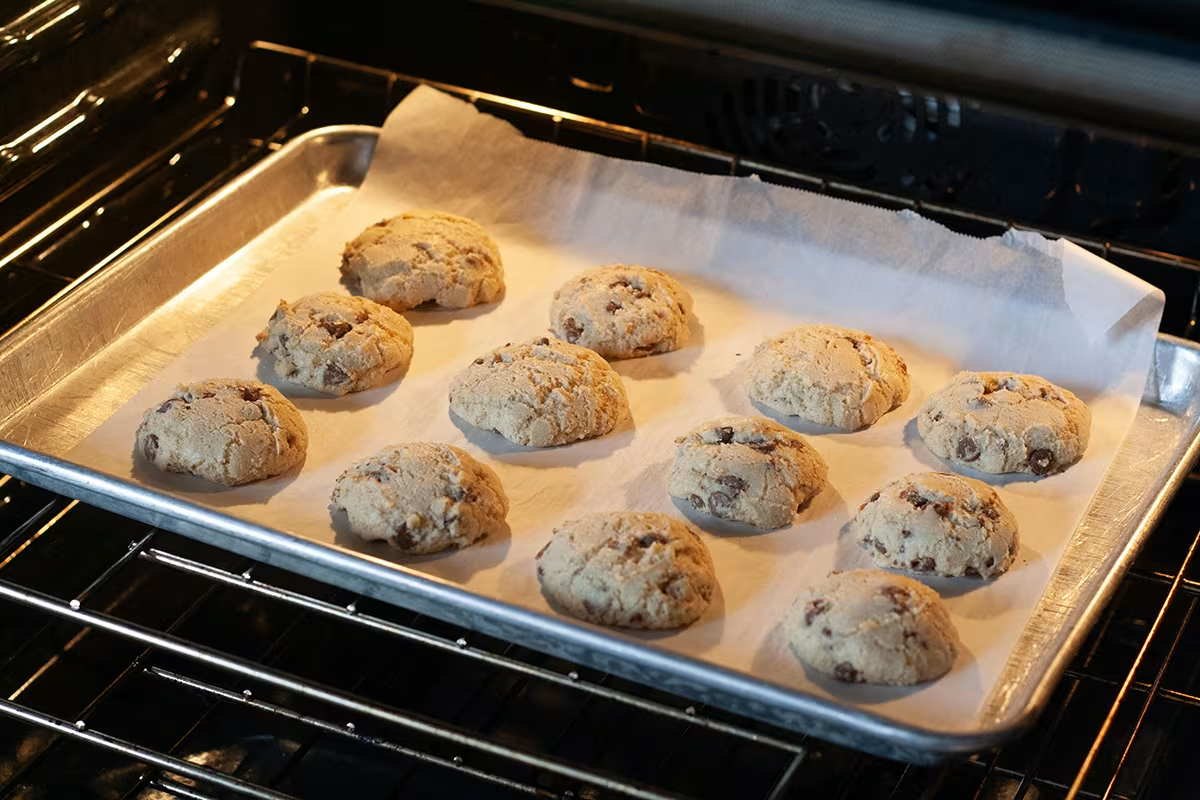
Let’s be real: finding a chocolate chip cookie recipe that actually delivers can feel impossible. You follow the instructions, wait for that perfect golden brown color, and then… disappointment. Too flat. Too hard. Not enough chocolate.
I get it because I’ve been there too many times to count.
That’s exactly why I’m sharing this recipe. It’s the one I come back to again and again when I want soft, chewy cookies with crispy edges—the kind that stay tender for days and taste like they came from a bakery. No chilling the dough for hours. No guessing games. Just cookies that work, every time.
Why You’ll Love This Recipe
Let me be honest with you: I’ve tried a lot of chocolate chip cookie recipes over the years. Some were too flat, others too cake-like, and many just didn’t have enough chocolate (what’s the point, right?). But this one? It’s different.
Here’s what makes these cookies special:
- Perfectly chewy texture – Soft centers that stay tender for days, with just enough crisp on the edges
- Loaded with chocolate – Because nobody wants a chocolate chip cookie with only three chips
- No chilling required – You can go from craving to cookie in under 30 minutes
- Beginner-friendly – Simple ingredients, straightforward steps, consistent results
- Crowd-pleaser – These cookies disappear at parties, bake sales, and family gatherings
The secret? It’s all about using melted butter instead of softened, getting the sugar ratio just right, and knowing exactly when to pull them from the oven (more on that later).
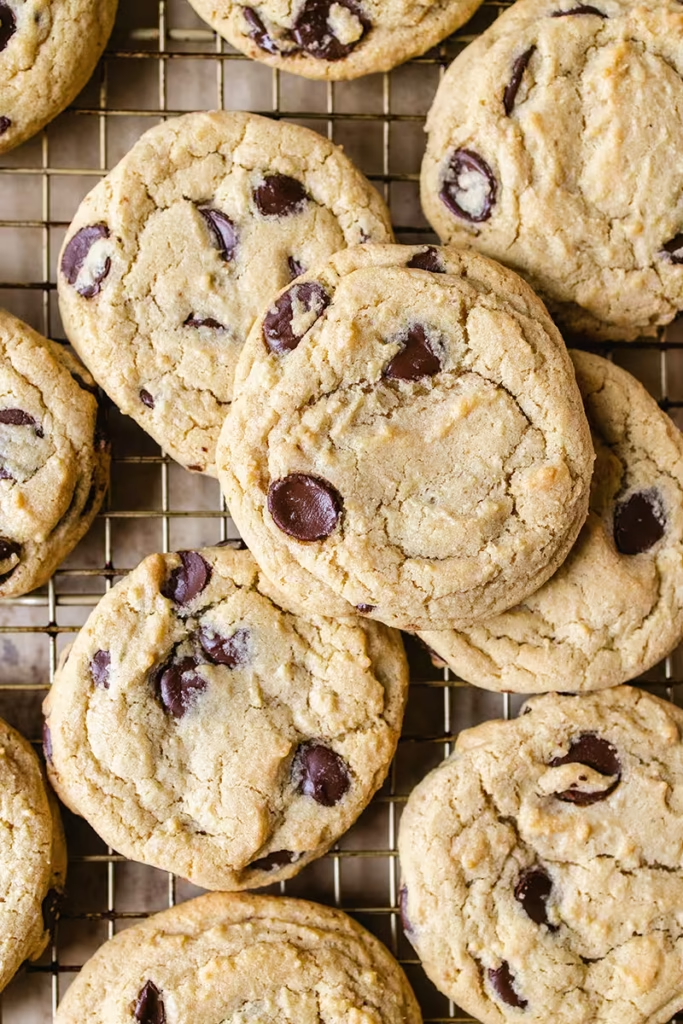
Table of Contents
What Makes These Cookies So Chewy?
Here’s where we get into the good stuff. You know how some cookies turn out crunchy like biscuits, while others are soft like cake? The difference comes down to science—but I promise to keep this simple. Here’s a comprehensive guide to oven baking, how baking works, and everything.
Melted butter is the MVP here. When you use softened butter and cream it with sugar, you’re incorporating air into the dough. That air creates a lighter, cakier texture. But when you use melted butter? You’re limiting that air incorporation, which gives you a denser, chewier cookie. It also allows the butter to coat the flour particles differently, creating more moisture retention.
Brown sugar is your friend. It contains molasses, which adds moisture and that deep, caramel-like flavor. The molasses is also slightly acidic, which helps keep cookies soft. That’s why this recipe uses more brown sugar than granulated.
Higher baking temperature = better texture. Baking at 375°F (190°C) instead of the more common 350°F (175°C) sets the edges quickly while keeping the centers soft and underdone. This creates that perfect contrast between crispy edges and gooey middles.
Slightly underbaking is key. This is probably the most important tip I can give you. When the edges look golden and set but the centers still look a bit puffy and underdone? That’s when you pull them. They’ll continue cooking on the hot pan as they cool, and you’ll end up with perfectly chewy cookies instead of hard pucks.
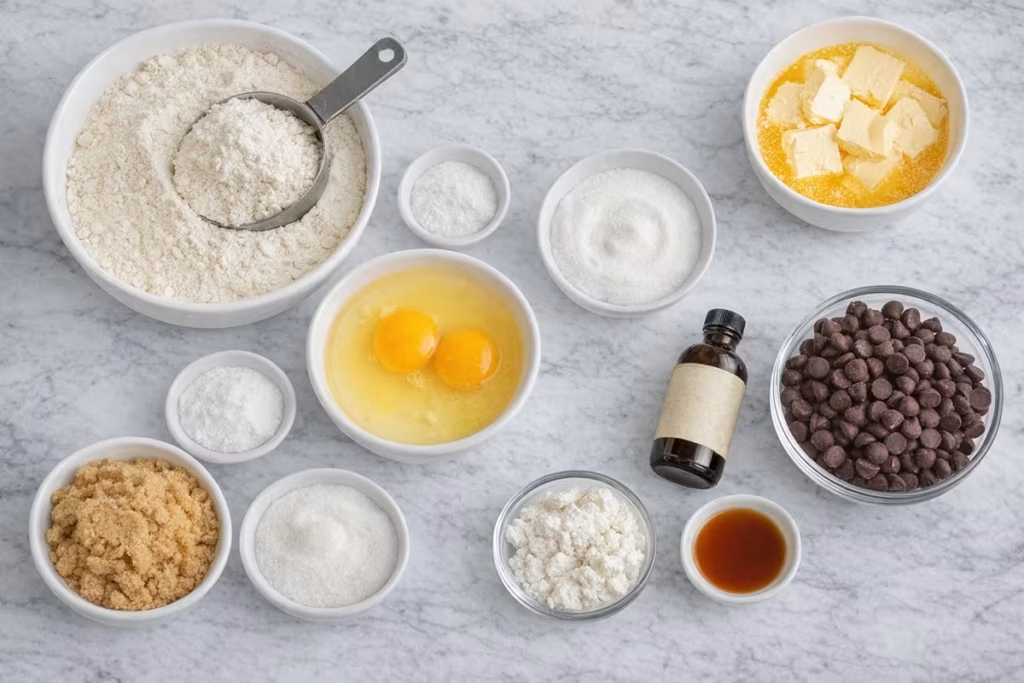
Ingredients You’ll Need
Let’s talk about what goes into these cookies and why each ingredient matters. I’m a big believer in understanding the “why” behind baking—it helps you troubleshoot when things don’t go as planned.
The Dry Ingredients
All-Purpose Flour – 2¼ cups (280g)
This is your structure. Flour contains proteins that form gluten when mixed with liquid, giving cookies their shape. Here’s the thing though: measuring flour correctly is crucial. If you scoop your measuring cup directly into the flour bag, you’ll pack in way more than you need, and your cookies will turn out dry and cakey. Instead, fluff up your flour with a spoon, then spoon it into your measuring cup and level it off with a knife. Or better yet, use a kitchen scale—it’s the most accurate method.
Baking Soda – 1 teaspoon (5g)
This is your leavening agent. Baking soda reacts with the brown sugar’s acidity to create carbon dioxide bubbles, which makes cookies rise and spread. It also helps with browning, giving you those beautiful golden edges. Don’t even think about skipping this!
Salt – 1 teaspoon (6g)
Salt isn’t just for flavor—it actually makes sweet things taste sweeter by balancing out the sugar. It also strengthens the gluten structure a bit, helping cookies hold their shape. I use Diamond Crystal kosher salt, but if you’re using fine table salt, reduce to ¾ teaspoon (about 4g) since it’s more concentrated.
The Wet Ingredients
Unsalted Butter – 1 cup (227g), melted and slightly cooled
The star of the show. We’re melting the butter to get that chewy texture I mentioned earlier. Make sure it’s unsalted so you can control the salt level in your cookies. After melting, let it cool for about 5-10 minutes. If it’s too hot when you add the eggs, you’ll end up with scrambled eggs in your cookie dough (trust me, not cute).
Light Brown Sugar – ¾ cup (165g), packed
Packed means you press it firmly into the measuring cup. The molasses in brown sugar is what keeps these cookies soft and adds that caramel-y flavor. You can use dark brown sugar if you want a deeper molasses flavor, but light brown is more traditional.
Granulated Sugar – ¾ cup (150g)
White sugar helps cookies spread and creates a bit of crispiness on the edges. The combination of brown and white sugar is what gives you that perfect texture balance.
Large Eggs – 2, at room temperature
Eggs bind everything together and add richness. Room temperature eggs mix more evenly into the dough. If you forget to take them out ahead of time, just place them in a bowl of warm water for 5-10 minutes.
Pure Vanilla Extract – 2 teaspoons (10ml)
Please don’t use imitation vanilla. The real stuff makes such a difference in flavor. It rounds out the sweetness and makes everything taste better.
The Mix-Ins
Semi-Sweet Chocolate Chips – 2 cups (350g)
This is a generous amount because life’s too short for cookies without enough chocolate. I prefer semi-sweet, but you can use whatever you like—dark chocolate, milk chocolate, or even a combination. Some people like to use chopped chocolate bars instead of chips because they create those beautiful melty chocolate puddles. Totally up to you!
Optional: Flaky Sea Salt
A sprinkle of flaky sea salt on top before baking is a total game-changer. It creates this sweet-salty contrast that makes these cookies absolutely addictive. Maldon or fleur de sel work great.
Quick Substitutions Guide
Can’t find an ingredient? Here are your options:
- Salted butter instead of unsalted? Sure! Just reduce the salt in the recipe to ½ teaspoon (3g).
- Only have granulated sugar? You can use all granulated (1½ cups/300g total), but your cookies will be crisper and less chewy.
- Want to make these gluten-free? Use a 1:1 gluten-free flour blend that contains xanthan gum. Bob’s Red Mill and King Arthur both make good ones.
- Need dairy-free? Use vegan butter (the stick kind, not tub margarine). Results will be similar.
- Want to add nuts? Fold in ½ cup (60g) of chopped walnuts or pecans with the chocolate chips.
Equipment & Tools
You don’t need a fancy kitchen to make amazing cookies. Here’s what I actually use:
Essential Tools
Two Large Baking Sheets
You’ll want two so you can rotate batches efficiently. I prefer heavy-duty aluminum pans that won’t warp in high heat. Avoid dark-colored pans if possible—they absorb more heat and can cause the bottoms to burn before the tops are done.
Parchment Paper or Silicone Baking Mats
These prevent sticking and help cookies bake evenly. I’m a huge fan of silicone mats because they’re reusable and eco-friendly, but parchment paper works just as well.
Mixing Bowls
You’ll need one medium bowl for the dry ingredients and one large bowl for everything else. Glass or stainless steel work great.
Whisk and Wooden Spoon (or Rubber Spatula)
A whisk is perfect for combining dry ingredients and mixing the butter with sugar. A wooden spoon or sturdy rubber spatula is best for folding in the flour and chocolate chips. You can absolutely use a hand mixer or stand mixer if you prefer, but honestly, this dough comes together so easily by hand that I rarely bother with electric mixers.
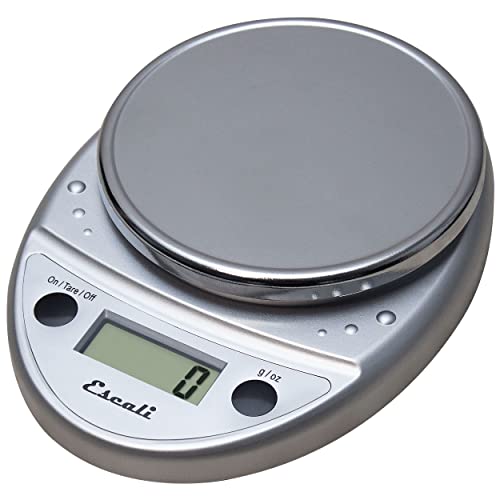
Kitchen Scale (Optional but Recommended)
I cannot stress this enough: weighing your ingredients—especially flour—makes a huge difference in consistency. Measuring cups are fine, but they’re not always accurate. A kitchen scale eliminates the guesswork.
Nice-to-Have Tools
Cookie Scoop (2-tablespoon/#40 size, about 30ml)
This isn’t required, but it makes portioning the dough so much easier and ensures all your cookies are the same size (which means they bake evenly). The #40 scoop gives you that perfect bakery-style size.
Wire Cooling Rack
Allows air to circulate around the cookies as they cool, preventing soggy bottoms. If you don’t have one, you can cool them on the counter on parchment paper.
Measuring Cups and Spoons
If you’re not using a scale, make sure you have a good set of dry measuring cups and measuring spoons.
Tools That Make Baking Easier:
[Some of the best baking tools that I can recommend:
- HOMURE H Good Grips Cookie Scoop Set – Makes uniform cookies effortlessly; the spring-release mechanism actually works.
- Escali Primo Digital Kitchen Scale – Affordable, accurate, and switches between grams and ounces with one button.
- Nordic Ware Natural Aluminum Baking Sheets – These have lasted me years without warping; commercial-grade quality.
- Silpat Silicone Baking Mat Set – Nonstick, reusable, and dishwasher-safe; I use mine constantly.]



How to Make Soft & Chewy Chocolate Chip Cookies: Step-by-Step
Alright, let’s get into it! I’m going to walk you through every single step with all the little details that make the difference between “meh” cookies and “oh my gosh these are amazing” cookies.
Step 1: Preheat Your Oven & Prep Your Pans
Preheat your oven to 375°F (190°C).
Start this right away because you want your oven fully heated and stabilized before the cookies go in. Most ovens take 15-20 minutes to truly reach temperature, even if the indicator light says it’s ready.
Line two baking sheets with parchment paper or silicone mats.
Make sure the parchment lies flat. If it keeps curling up, put a dab of butter in each corner of the pan to hold it down (though this usually isn’t necessary).
Position your oven rack in the center.
This ensures even heat circulation. If you’re baking two sheets at once, position racks in the upper and lower thirds and rotate the pans halfway through baking.
Step 2: Mix Your Dry Ingredients
In a medium bowl, whisk together:
- 2¼ cups (280g) all-purpose flour
- 1 teaspoon (5g) baking soda
- 1 teaspoon (6g) salt
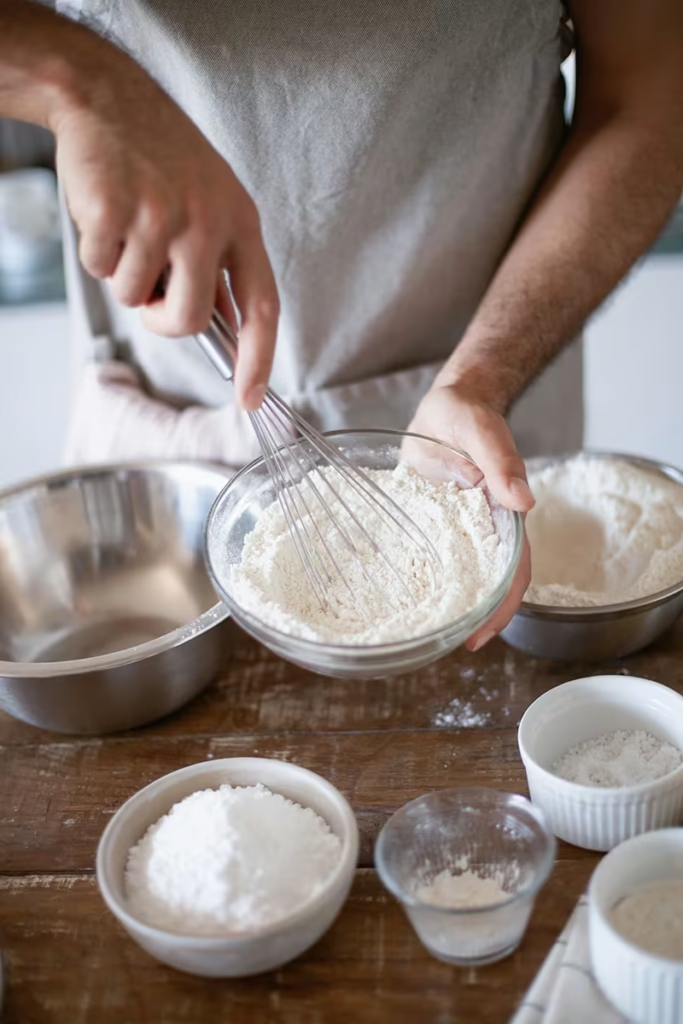
This step seems simple, but it’s important. Whisking distributes the baking soda and salt evenly throughout the flour, so you don’t end up with pockets of salty or soapy-tasting baking soda in your finished cookies. I usually whisk for about 15-20 seconds until I can see the ingredients are well combined.
Set this bowl aside. You’ll add it to the wet ingredients later.
Step 3: Melt and Cool Your Butter
Melt 1 cup (227g) of unsalted butter.
You can do this in the microwave or on the stovetop—I’m not picky. If using the microwave, cut the butter into pieces and microwave in 15-second intervals, stirring between each one. This prevents it from exploding everywhere (been there).
Let the butter cool for 5-10 minutes.
This is crucial. If the butter’s too hot when you add the eggs, you’ll get little cooked egg bits in your dough (not the end of the world, but not ideal). Touch the bowl—it should feel warm but not hot. You can speed this up by placing the bowl in the fridge for a few minutes, just don’t let it start to solidify again.
Step 4: Mix Butter and Sugars
In a large bowl, combine:
- 1 cup (227g) melted butter (cooled)
- ¾ cup (165g) packed light brown sugar
- ¾ cup (150g) granulated sugar
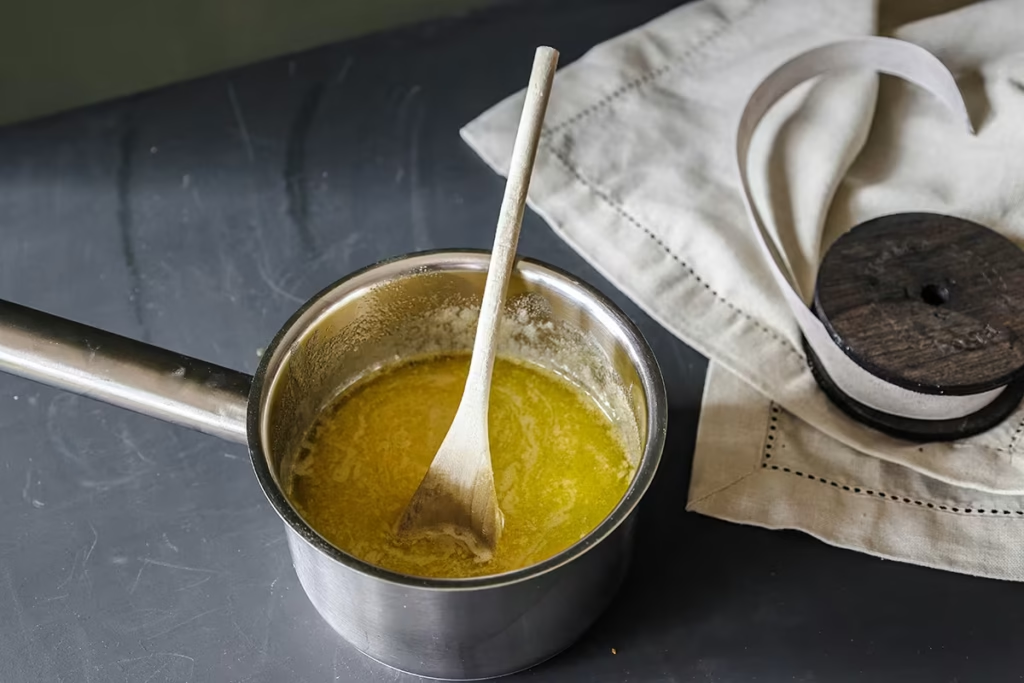
Whisk vigorously for about 1 minute.
You want the mixture smooth and slightly lighter in color. It won’t get fluffy like creamed butter and sugar would, but you should see the sugars start to dissolve into the butter. The texture will be thick, glossy, and uniform. This whisking step helps dissolve some of the sugar crystals, which contributes to that chewy texture.
I usually start with a whisk here, but you can also use a wooden spoon or even a hand mixer on low speed if you prefer. Don’t overthink it—the goal is just to get everything well combined.
Step 5: Add Eggs and Vanilla
Add the eggs one at a time.
Crack your first egg into the bowl and whisk it in completely before adding the second one. This helps create an emulsion (a fancy word for getting the fat and liquid to combine smoothly). You’ll notice the mixture gets lighter and more voluminous as you whisk.
Stir in 2 teaspoons (10ml) vanilla extract.
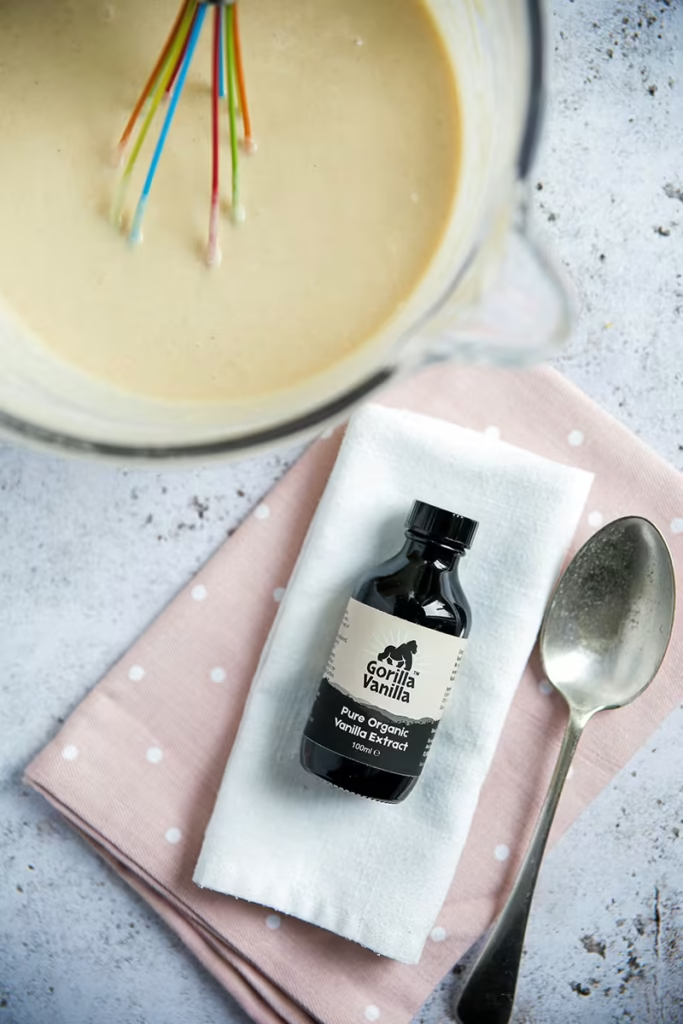
Whisk until the mixture is glossy and emulsified.
This should take about 30 seconds. You’re looking for a smooth, cohesive mixture that looks almost shiny. If it looks separated or oily, keep whisking—it’ll come together. This emulsification is important because it helps create a uniform dough that bakes evenly.
Step 6: Add the Dry Ingredients
Pour your flour mixture into the wet ingredients all at once.
Some people like to add it gradually, but honestly, I just dump it all in. Either way works.
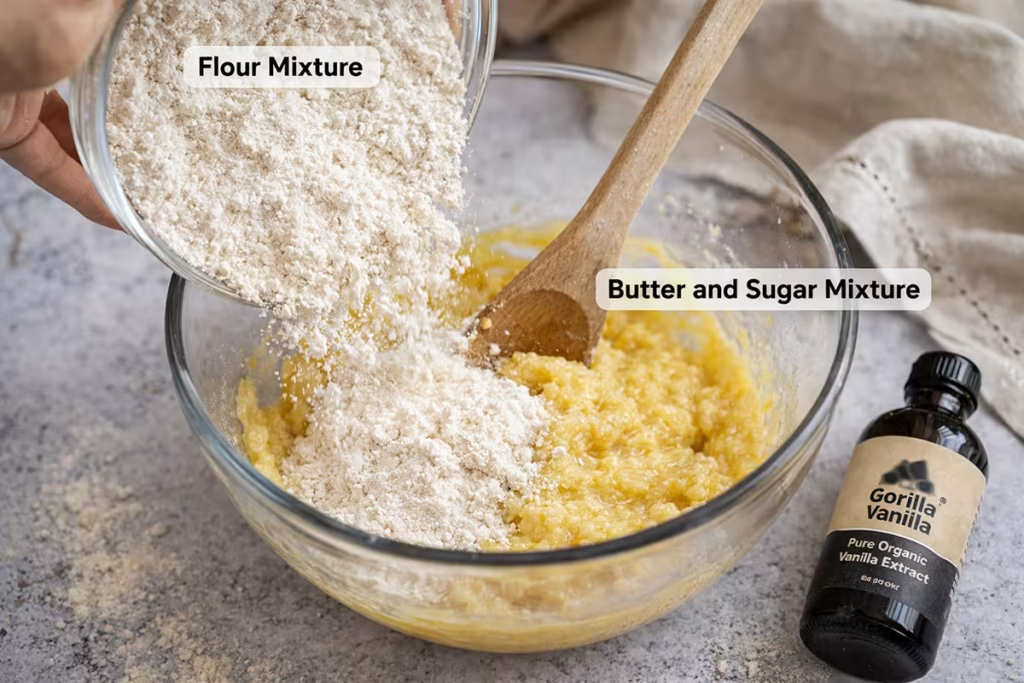
Switch to a wooden spoon or rubber spatula and fold the flour in gently.
Here’s where you need to be a bit careful. Overmixing develops the gluten in the flour, which makes cookies tough and cakey instead of tender and chewy. Mix just until you don’t see any more dry flour streaks—the dough should look uniform.
The dough will be thick and slightly sticky. That’s exactly what you want! If it seems really soft or greasy, that’s normal. It’ll firm up slightly as it sits, and melted butter dough is naturally softer than creamed butter dough.
Pro tip: If you overmix a bit, don’t panic. Your cookies will still turn out good—they might just be a tiny bit less tender. Baking is pretty forgiving.
Step 7: Fold in the Chocolate Chips
Add 2 cups (350g) semi-sweet chocolate chips.
Dump them right in there. If you’re adding nuts or any other mix-ins, this is the time.
Fold gently with your spoon until the chips are evenly distributed.
I usually do about 10-15 gentle folds. You want chocolate in every bite, but you don’t want to overmix the dough trying to achieve perfect distribution.
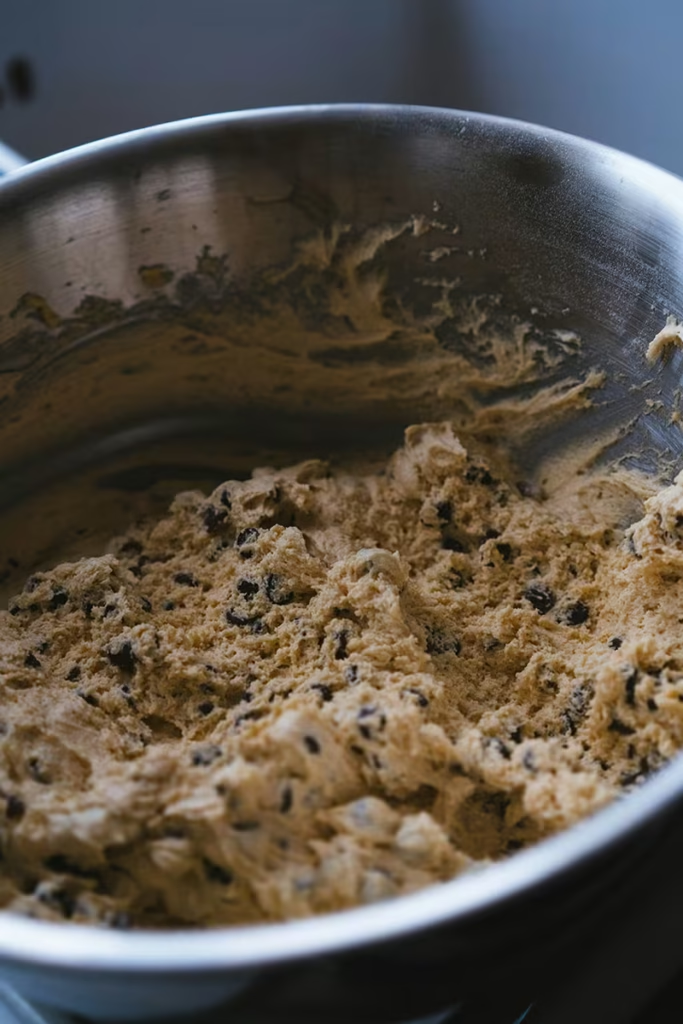
Want that bakery look? Reserve about ¼ cup (45g) of chocolate chips to press onto the tops of the cookies after you scoop them. This creates those gorgeous chocolate-studded tops you see in bakery windows.
Step 8: Scoop the Dough
Use a 2-tablespoon (30ml) cookie scoop or spoon to portion the dough.
If you’re using a scoop, pack it firmly so you get nice, round balls. If you’re using spoons, try to make them roughly the same size—about 2 tablespoons of dough each. This recipe makes about 36 cookies, depending on how big you make them.
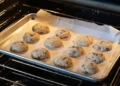
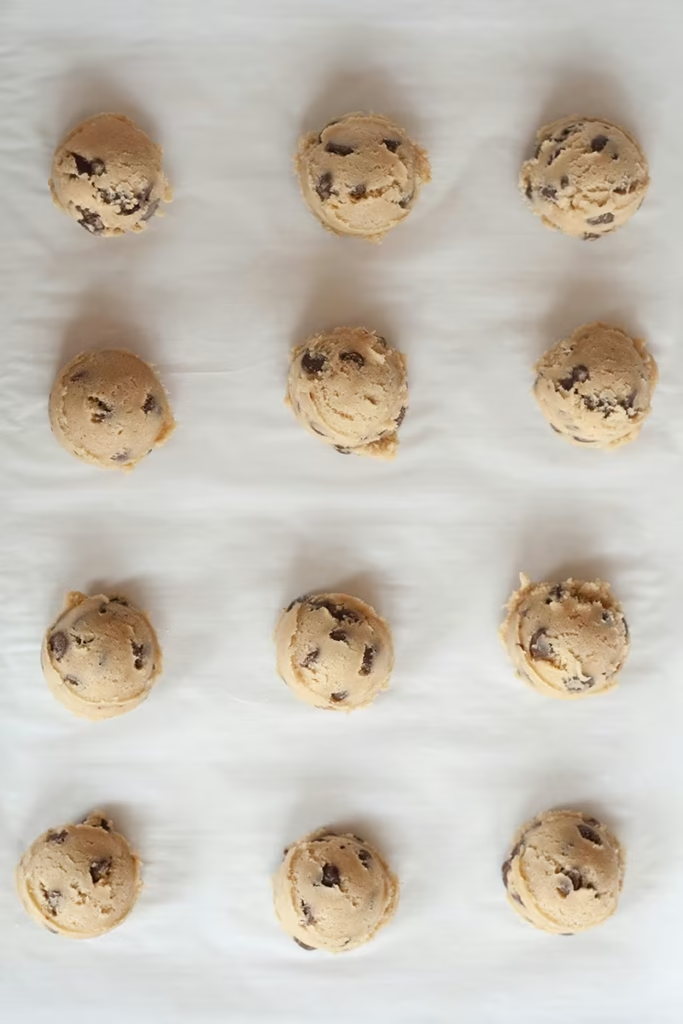
Place dough balls on your prepared baking sheets, spacing them about 2 inches (5cm) apart.
They’ll spread as they bake, so give them room. I usually fit 12 cookies per standard baking sheet (4 rows of 3).
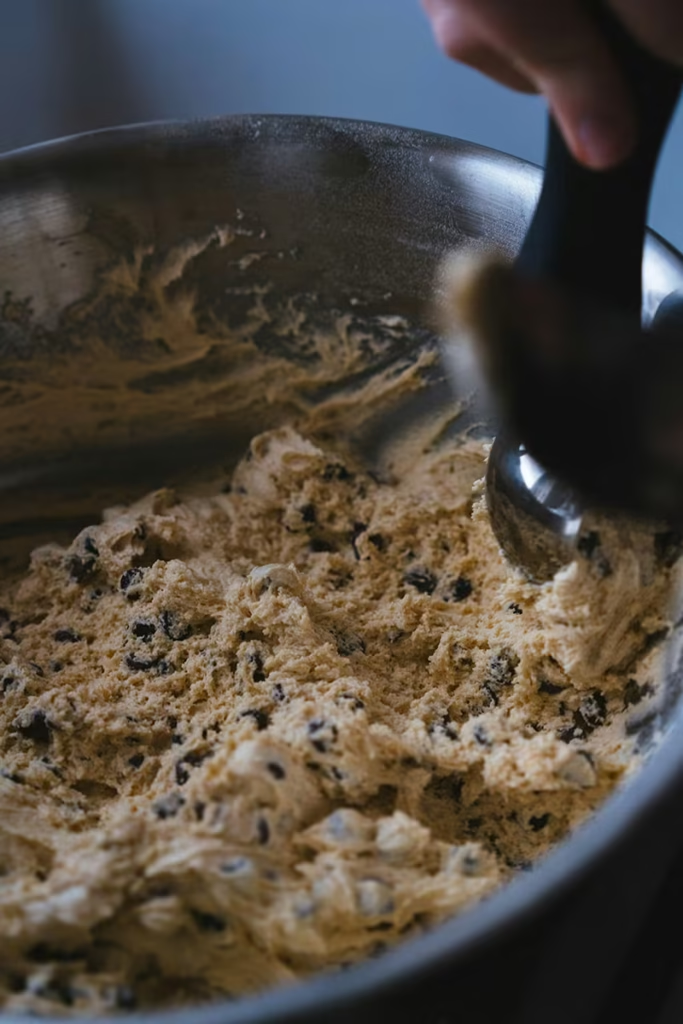
Optional but gorgeous: Press a few extra chocolate chips onto the tops of each dough ball. This ensures they look absolutely loaded with chocolate when they come out of the oven.
Don’t flatten the dough balls. Just leave them as rounded mounds. They’ll naturally flatten and spread as they bake.
Step 9: Bake to Perfection
Bake for 10-12 minutes.
This is where the magic happens, but it’s also where most people overcook their cookies. So let me be very clear about what you’re looking for:
What properly baked cookies look like:
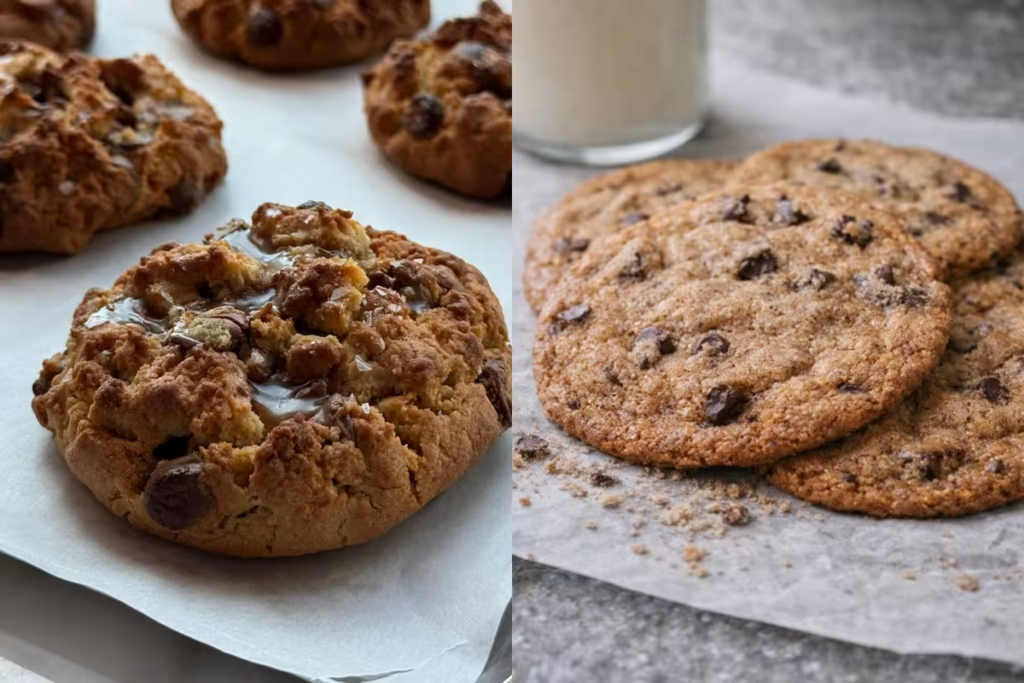
- Edges are golden brown and look set
- Centers are still puffy and look slightly underdone—they might even look a bit shiny or wet
- The tops may have some cracks forming
- The whole cookie will jiggle just a bit if you shake the pan gently
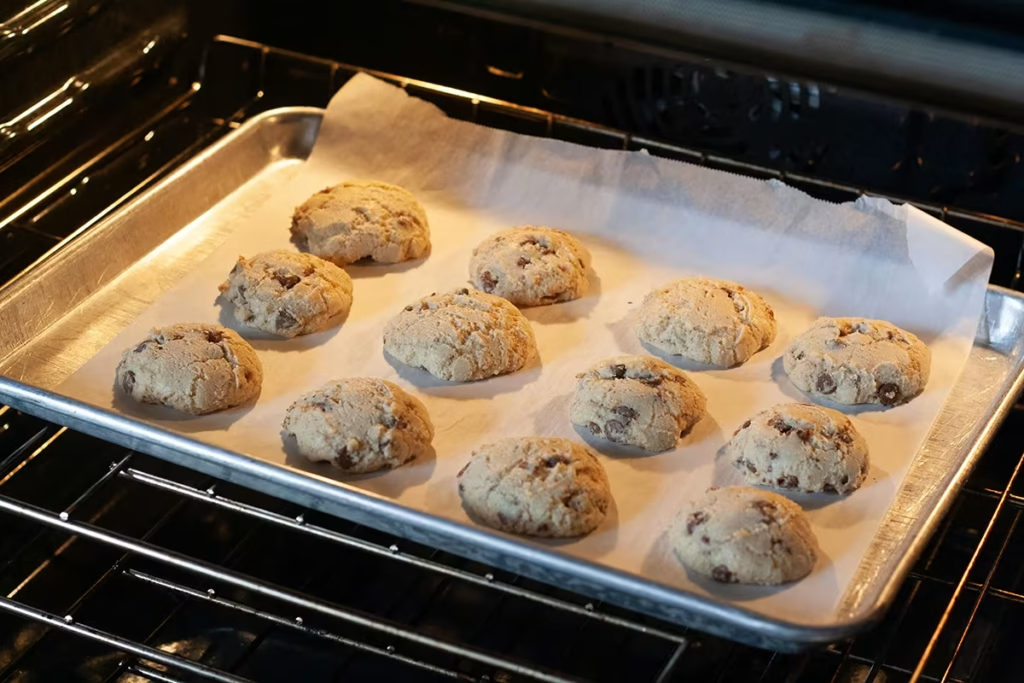
What overbaked cookies look like:
- The entire cookie is golden brown, including the center
- Everything looks completely set and dry
- No jiggle when you shake the pan
Here’s the thing: cookies continue baking on the hot pan even after you take them out of the oven (this is called carryover cooking). If you wait until they look completely done in the oven, they’ll be overdone by the time they cool. I know it feels wrong to pull cookies that look underbaked, but trust the process!
For my oven, 11 minutes is the sweet spot. Your oven might be different. The first batch is always a test batch—take notes on the timing so you can nail it on subsequent batches.
If you’re baking two sheets at once: Rotate them halfway through (around the 5-6 minute mark). Move the top sheet to the bottom rack and vice versa, and turn them 180 degrees. This ensures even baking.
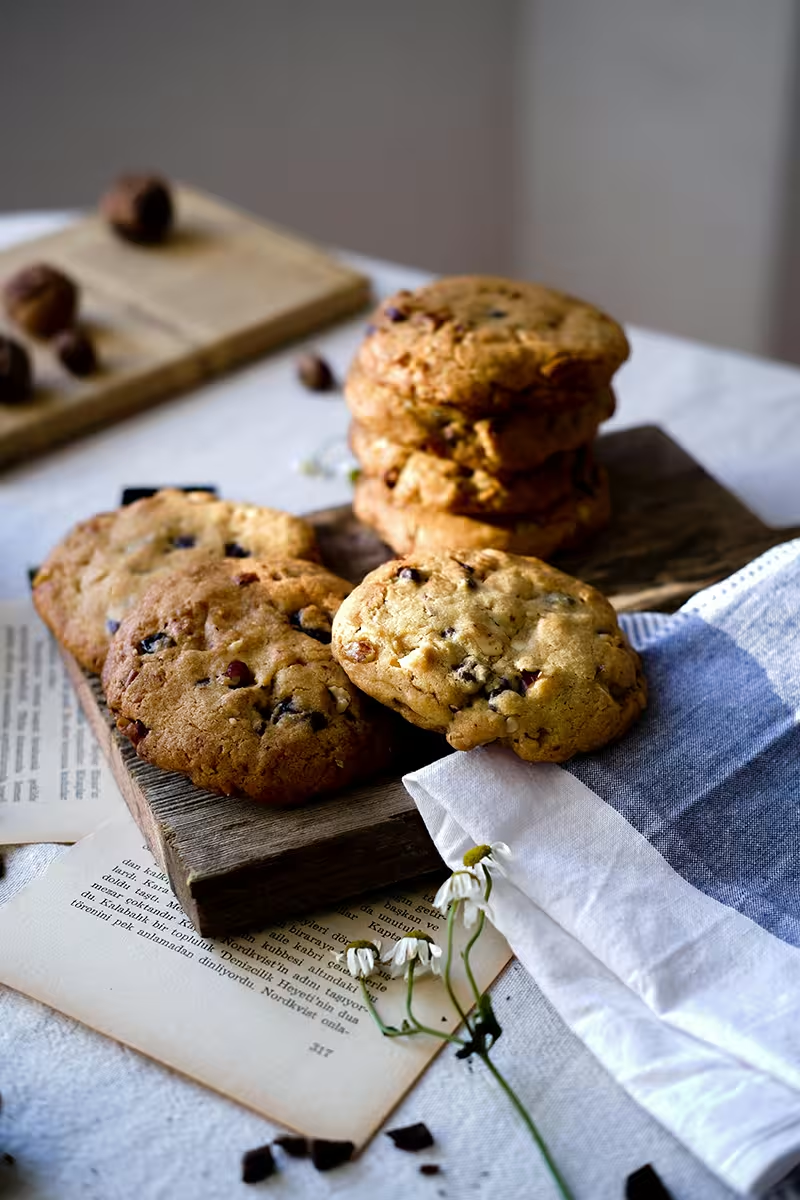
Soft & Chewy Chocolate Chip Cookies
Ingredients
Equipment
Method
- Preheat and prep: Preheat your oven to 375°F (190°C). Line one large baking sheet with parchment paper or a silicone baking mat.
- Mix dry ingredients: In a medium bowl, whisk together the flour, baking soda, and salt until well combined. Set aside.
- Melt and cool butter: Melt the butter and let it cool for 5-10 minutes until it's warm but not hot to the touch.
- Combine butter and sugars: In a large bowl, whisk together the melted butter, brown sugar, and granulated sugar for about 1 minute until smooth and slightly lighter in color.
- Add egg and vanilla: Add the egg and whisk well until combined. Stir in the vanilla extract. Continue whisking until the mixture is glossy and emulsified, about 30 seconds.
- Add flour mixture: Pour the dry ingredients into the wet ingredients. Using a wooden spoon or rubber spatula, gently fold together just until no flour streaks remain. Don't overmix!
- Fold in chocolate: Add the chocolate chips and fold gently until evenly distributed throughout the dough.
- Scoop cookies: Using a 2-tablespoon (30ml) cookie scoop or spoon, portion the dough and place on prepared baking sheet, spacing them about 2 inches (5cm) apart. You should get 12 cookies. For a bakery look, press a few extra chocolate chips onto the tops of each dough ball.
- Bake: Bake for 10-12 minutes, until the edges are golden brown but the centers still look slightly underdone and puffy. The cookies should jiggle slightly when you gently shake the pan.
- Cool: Let the cookies cool on the baking sheet for 5 minutes (they'll firm up during this time), then transfer to a wire cooling rack to cool completely.
- Optional: Sprinkle with flaky sea salt while still warm.
Notes
Step 10: The Cooling Process (Don’t Skip This!)
Let the cookies cool on the baking sheet for 5 minutes.
This is crucial! If you try to move them immediately, they’ll fall apart because they’re still super soft. During these 5 minutes, the residual heat from the pan continues to cook the bottoms slightly and the cookies firm up just enough to be movable.
You’ll notice the cookies deflate a bit during this time—that’s normal and good! They’re settling into that perfect chewy texture.
After 5 minutes, transfer to a wire cooling rack.
Use a thin spatula to gently lift each cookie. They should slide off easily. If one seems stuck, let it cool another minute.
Cool completely on the rack (or eat them warm—I won’t judge).
Cookies will continue to firm up as they cool. Warm cookies are amazing, but they also won’t have their full chewy texture until they’ve cooled to room temperature.
Between batches: Make sure your baking sheets have cooled completely before scooping more dough onto them. I usually run cold water on the bottom of the pan (being careful not to get the parchment wet) or just let it sit for a few minutes. Putting dough on a hot pan causes the cookies to spread too much before they start baking.
Recipe Tips for Perfect Cookies Every Time
After making these cookies dozens of times (and eating way too many), here are my hard-earned tips:
Temperature Tips
Room temperature eggs mix better. They blend into the dough more smoothly and create a better emulsion. Cold eggs can cause the melted butter to solidify into little clumps. If you forget to take them out, place them in a bowl of warm tap water for 5-10 minutes.
Let that butter cool! I can’t emphasize this enough. Hot butter + eggs = scrambled eggs. Warm butter = perfect dough.
Oven temperature matters. If your oven runs hot or cool, your baking time will be different. I highly recommend getting an oven thermometer (they’re like a few bucks) to check your actual oven temperature. My oven runs about 15°F cooler than the dial says, so I set it to 390°F to get an actual 375°F. Btw, to understand how oven temperature works, read Ultimate Oven Temperature Guide for Baking.
Texture Customization
Want thicker cookies? Chill your scooped dough balls in the fridge for 30 minutes before baking. Cold dough spreads less, giving you taller, thicker cookies.
Want even chewier cookies? Replace up to 1 cup (125g) of the all-purpose flour with bread flour. The higher protein content in bread flour creates more gluten structure, resulting in chewier cookies.
Want crispier edges? Increase the granulated sugar to 1 cup (200g) and decrease the brown sugar to ½ cup (110g).
Want softer, cake-like cookies? Use all brown sugar (1½ cups/330g total) and bake at 350°F (175°C) for 11-13 minutes.
Chocolate Distribution
Press extra chips on top before baking. Those chocolate-loaded bakery cookies you see on Instagram? They all have chips pressed into the top. It’s an easy trick that makes your cookies look professional.
Mix up your chocolate. Try half semi-sweet chips and half dark chocolate chunks. Or throw in some white chocolate chips. The variety in chocolate types creates different melting points and textures.
Chopped chocolate bars create puddles. If you chop a chocolate bar instead of using chips, you get those beautiful melty chocolate puddles. Chips are formulated to hold their shape; bar chocolate isn’t.
Preventing Common Issues
Cookies spreading too much? Your butter might have been too hot, or your kitchen is very warm. Chill the dough for 15-30 minutes before baking. Also make sure you’re measuring flour correctly—too little flour causes spreading.
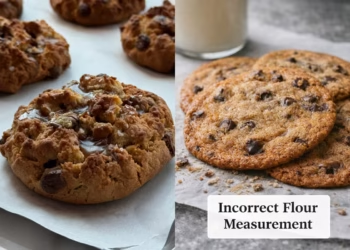
Cookies not spreading enough? Your flour measurement might be off (too much flour), or your dough might be too cold. Make sure you’re spooning flour into the cup and leveling it off, not scooping.
Cookies too cakey? You probably have too much flour (from scooping directly from the bag), or you’re using softened butter instead of melted. Also check that you’re not overmixing the dough.
Cookies too hard? You’re overbaking them. Pull them a minute earlier next time. Remember, they should look slightly underdone when you take them out.
Uneven baking? Use the middle rack if baking one sheet. If baking two sheets, rotate them halfway through. Also check that your oven rack is level.
Measuring Flour Correctly (This Deserves Its Own Section!)
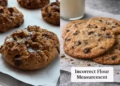
I see this mistake all the time, and it’s the #1 cause of baking failures. When you scoop a measuring cup directly into the flour bag, you pack in way more flour than the recipe calls for. This makes cookies dry, cakey, and dense.
The right way:
- Fluff up your flour in the bag or container with a spoon
- Spoon flour into your measuring cup
- Level it off with a straight edge (back of a knife)
The even better way: Use a kitchen scale. 1 cup of all-purpose flour should weigh 125g. If you measure by weight, you eliminate this variable entirely.
Variations to Try
Once you’ve mastered the base recipe, the world is your oyster! Here are some of my favorite variations:
Double Chocolate Cookies
Replace ¼ cup (30g) of the all-purpose flour with unsweetened cocoa powder. Use dark chocolate chips or chunks. These are ridiculously rich and fudgy.
Brown Butter Chocolate Chip Cookies
Instead of just melting the butter, brown it! Cook the butter in a saucepan over medium heat, swirling occasionally, until it turns golden brown and smells nutty (about 5-7 minutes). Let it cool completely before using. This adds an incredible depth of flavor—almost caramel-like with toasted nut notes.
Espresso Chocolate Chip Cookies
Add 1 tablespoon (6g) instant espresso powder to the dry ingredients. The coffee flavor is subtle but it intensifies the chocolate. These are dangerous.
Sea Salt Caramel Cookies
Add ½ cup (100g) caramel chips along with the chocolate chips. Sprinkle flaky sea salt on top before baking. Sweet, salty, gooey perfection.
Nutty Chocolate Chip Cookies
Fold in ½ cup (60g) chopped walnuts, pecans, or toasted hazelnuts with the chocolate chips. Toast the nuts first for extra flavor—just spread them on a baking sheet and bake at 350°F (175°C) for 5-7 minutes until fragrant.
Peanut Butter Chocolate Chip Cookies
Replace ½ cup (120g) of the melted butter with ½ cup (120g) creamy peanut butter. The texture will be slightly different (a bit more cakey), but the flavor is incredible.
Kitchen Sink Cookies
Add whatever you want! I’ve done pretzels + peanut butter chips, coconut + macadamia nuts, toffee bits + pecans. Just keep the total mix-ins to about 2-2½ cups (350-440g) so the dough doesn’t get overwhelmed.
Gluten-Free Chocolate Chip Cookies
Swap the all-purpose flour for a 1:1 gluten-free flour blend (I like King Arthur Measure for Measure or Bob’s Red Mill 1-to-1). Make sure it contains xanthan gum. The texture might be slightly different—sometimes a bit more delicate—but they’re still delicious.
How to Store Your Cookies
Room Temperature Storage
Store in an airtight container at room temperature for up to 5 days.
Layer them with parchment paper if you’re stacking them. Don’t mix different types of cookies in the same container—flavors can transfer.
The bread trick: This is an old baker’s trick. Put a slice of plain white bread in the container with your cookies. The cookies will absorb moisture from the bread instead of drying out themselves, keeping them soft. Replace the bread every couple of days. Sounds weird, works perfectly.
Don’t refrigerate cookies. The fridge dries them out. Room temperature is best.
Freezing Baked Cookies
These freeze beautifully for up to 3 months.
Let cookies cool completely, then arrange them in a single layer on a baking sheet and freeze until solid (about 1-2 hours). Transfer frozen cookies to a freezer-safe bag or container, layering with parchment paper.
To thaw: Leave them at room temperature for 30 minutes, or microwave individual cookies for 10-15 seconds for that fresh-baked warmth.
Freezing Cookie Dough (My Favorite Method!)
This is a game-changer. You can have fresh-baked cookies anytime without mixing up a whole batch.
Scoop your cookie dough onto a parchment-lined baking sheet. Place the whole sheet in the freezer for 1-2 hours until the dough balls are completely frozen solid.
Transfer frozen dough balls to a freezer bag. Label with the date and baking instructions. They’ll keep for up to 3 months.
To bake from frozen: No need to thaw! Place frozen dough balls on a parchment-lined baking sheet and bake at 375°F (190°C) for 12-14 minutes (about 2 minutes longer than usual). They’ll taste like you just made the dough fresh.
Pro tip: Freeze dough in different quantities—maybe 4 dough balls for date night, 12 for a small gathering. You’ll thank yourself later.
Troubleshooting Common Problems
Let’s talk about what to do when things don’t go quite right. I’ve made every mistake possible, so learn from my pain!
Problem: Cookies Spread Too Thin and Flat
Causes:
- Butter was too hot when mixed
- Dough was too warm when baking
- Not enough flour (measuring error)
- Forgot the baking soda
- Baking sheet was too hot
Solutions:
- Let melted butter cool to just warm before mixing
- Chill dough for 30 minutes before baking
- Check your flour measurement—use the spoon-and-level method or weigh it
- Double-check you added the baking soda
- Let baking sheets cool completely between batches
Problem: Cookies Are Too Thick and Cakey
Causes:
- Too much flour (most common!)
- Using softened butter instead of melted
- Overmixing the dough
- Oven temperature too low
Solutions:
- Weigh your flour or use the spoon-and-level method
- Make sure butter is fully melted and cooled
- Mix just until flour disappears
- Check oven temp with a thermometer
Problem: Cookies Are Hard and Crunchy
Causes:
- Overbaking (this is the #1 culprit)
- Too much white sugar, not enough brown sugar
- Not enough butter
Solutions:
- Reduce baking time by 1-2 minutes
- Pull cookies when centers still look slightly underdone
- Double-check your ingredient measurements
- Set a timer and watch them closely near the end
Problem: Cookies Have Uneven Texture or Taste
Causes:
- Dry ingredients not mixed well
- Baking soda or salt clumped up
- Chocolate chips not evenly distributed
Solutions:
- Whisk dry ingredients thoroughly before adding to wet
- Break up any clumps in baking soda or salt
- Fold chocolate chips in gently but completely
Problem: Centers Are Raw While Edges Are Overdone
Causes:
- Oven temperature too high
- Cookies too large
- Dark baking sheets
Solutions:
- Lower oven temp to 365°F (185°C)
- Make slightly smaller cookies
- Use lighter-colored baking sheets or reduce temp by 25°F (about 15°C)
Problem: Cookies Stick to the Pan
Causes:
- No parchment paper or silicone mat
- Trying to remove them too soon
- Baking spray wasn’t nonstick enough
Solutions:
- Always use parchment paper or silicone mats
- Let cookies cool on the pan for a full 5 minutes
- If stuck, slide a thin spatula under gently while still warm
Problem: Bottom of Cookies Too Brown or Burnt
Causes:
- Oven rack too low
- Dark baking sheets absorbing too much heat
- Oven running hot
Solutions:
- Move rack to center position
- Use light-
colored aluminum baking sheets
- Lower oven temp by 25°F (about 15°C)
- Place a second baking sheet underneath (double-panning)
Frequently Asked Questions
I get asked these questions all the time, so here are the detailed answers!
Can I use salted butter instead of unsalted?
Absolutely! Just reduce the salt in the recipe to ½ teaspoon (3g) instead of 1 teaspoon. Salted butter typically has about ¼ teaspoon of salt per ½ cup (115g), so you’re accounting for that. Your cookies will have a slightly saltier flavor, which some people actually prefer. I do this all the time when I’m out of unsalted butter.
Why do my cookies always turn out flat?
This is probably the most common cookie complaint! Nine times out of ten, it’s because the butter was too warm when you mixed it, or the dough was warm when it went into the oven. Melted butter dough is naturally softer than creamed butter dough, so temperature really matters. Try chilling your dough for 30 minutes before baking. Also double-check that you added the baking soda—it helps cookies puff up rather than spread out. And make sure you’re measuring flour correctly (spoon and level, don’t scoop!).
Can I make these cookies without brown sugar?
You can, but they won’t be quite the same. Brown sugar is what makes these cookies so soft and chewy. If you only have granulated sugar, use 1½ cups (300g) total, but expect cookies that are crisper and less chewy. You could also make your own brown sugar by mixing 1 cup (200g) granulated sugar with 1 tablespoon (15ml) molasses for light brown sugar.
Do I really need to let the butter cool after melting?
Yes! I know it seems fussy, but if the butter’s too hot when you add the eggs, you’ll get little bits of cooked egg in your dough. It won’t ruin the cookies, but it’s not ideal. Plus, very hot butter can start to cook the flour when you mix it in, affecting texture. Just let it sit for 5-10 minutes while you measure other ingredients. It should feel warm but not hot when you touch the bowl.
How do I make my cookies thicker and chewier?
Great question! Here are your options: (1) Chill the dough for 30 minutes to 1 hour before baking—cold dough spreads less; (2) Replace up to 1 cup (125g) of all-purpose flour with bread flour for more chew; (3) Use all brown sugar instead of the mix; (4) Make sure you’re not overbaking—pull them when they still look slightly underdone in the center. You can also try slightly underbaking by 1 minute.
Can I freeze the cookie dough?
This is my favorite way to use this recipe! Scoop the dough into balls, freeze them on a baking sheet until solid (1-2 hours), then transfer to a freezer bag. They’ll keep for up to 3 months. Bake directly from frozen—no thawing needed—just add 1-2 minutes to the baking time. It’s like having a cookie emergency kit in your freezer.
Why are my cookies cakey instead of chewy?
Usually this means you have too much flour in the dough. This happens when you scoop the measuring cup directly into the flour bag—it packs way more flour than the recipe intends. Always spoon flour into your measuring cup and level it off with a knife. Or better yet, weigh it (2¼ cups = 280g). Overmixing the dough can also make cookies cakey by developing too much gluten. Mix just until you don’t see flour streaks.
Can I use dark chocolate instead of semi-sweet chips?
Definitely! Use whatever chocolate you like. Dark chocolate (60-70% cacao) makes these cookies more sophisticated and less sweet. Milk chocolate makes them sweeter and more mellow. You can even mix different types—half semi-sweet, half dark is really good. Chopped chocolate bars instead of chips create those gorgeous melty puddles you see in bakery cookies.
How long do these cookies stay fresh?
They’ll stay soft and delicious for about 5 days in an airtight container at room temperature. After that, they start to dry out a bit (though they’re still perfectly edible). For longer storage, freeze them. And try the bread trick I mentioned earlier—put a slice of plain bread in the container with the cookies to keep them extra soft.
Can I add nuts to this recipe?
For sure! Fold in ½ cup (60g) of chopped walnuts, pecans, or hazelnuts with the chocolate chips. I recommend toasting the nuts first for better flavor—just spread them on a baking sheet and toast at 350°F (175°C) for 5-7 minutes until fragrant. Let them cool before adding to the dough.
What’s the best way to measure flour?
I’m so glad you asked! This is crucial. The best way is to use a kitchen scale—weigh out 280g. If you don’t have a scale, use the spoon-and-level method: fluff up the flour in the bag, spoon it into your measuring cup (don’t pack it down), and level it off with a straight edge. Never scoop the measuring cup directly into the flour—you’ll pack in about 30% more flour than intended, which makes cookies dry and cakey.
My cookies came out greasy. What happened?
This usually happens when the butter was too hot when you mixed it. Make sure you’re letting melted butter cool for 5-10 minutes before adding it to the sugars. It could also mean you undermixed the dough—the butter needs to emulsify with the eggs and sugar. Mix the wet ingredients until they’re smooth and glossy before adding flour.
Can I make these cookies smaller or larger?
Absolutely! For smaller cookies, use a 1-tablespoon scoop and bake for 8-10 minutes. For larger bakery-style cookies, use a 3-tablespoon (¼ cup) scoop and bake for 13-15 minutes. Just watch them carefully and pull them when the edges are golden but centers still look slightly underdone. Larger cookies may also need a bit more space between them on the pan—try 3 inches (7-8cm).
Why This Recipe Works: The Science Behind Perfect Cookies
Okay, I know we touched on this earlier, but let’s dig a bit deeper for those of you who really want to understand the “why” behind the technique. You can skip this section if you just want to bake, but if you’re a baking nerd like me, this is the good stuff.
The Role of Melted Butter
When you cream softened butter with sugar, you’re creating air pockets in the fat. Those air pockets expand during baking, creating a lighter, cakier texture. With melted butter, you can’t incorporate air the same way. Instead, the butter coats the flour particles differently, limiting gluten development and creating a denser, chewier texture.
Melted butter also has a higher water content on the surface (butter is about 15-20% water), which creates more steam during baking. This steam contributes to spreading and helps create those crispy edges.
Brown Sugar vs. Granulated Sugar
Brown sugar is just white sugar with molasses added back in. That molasses is hygroscopic, meaning it attracts and retains moisture. This is why cookies made with more brown sugar stay soft longer—they literally hold onto moisture better.
The acid in molasses also reacts with baking soda to create carbon dioxide, which helps cookies rise and creates a more tender crumb. Plus, molasses contains more complex sugars that contribute to deeper caramel flavors and better browning.
Granulated sugar, on the other hand, is pure sucrose. It doesn’t hold moisture the same way, which is why it contributes to crispness. The balance between brown and granulated sugar in this recipe (equal amounts) gives you the best of both worlds.
Why Higher Heat Works
Baking at 375°F (190°C) instead of the more common 350°F (175°C) creates what bakers call “oven spring.” The outside of the cookie sets quickly from the high heat, while the inside is still soft. This traps moisture inside and creates that contrast between crispy edges and chewy centers.
At lower temperatures, cookies spread more before they set, and they bake more evenly throughout (which is great for some cookies, but not what we want here).
The Importance of Underbaking
Cookie dough continues to cook from residual heat even after you remove it from the oven. This is called carryover cooking, and it’s significant—the internal temperature of a cookie can rise another 10-15°F (5-8°C) during those first few minutes of cooling.
When the edges are golden but the centers still look puffy and slightly wet, the internal temperature is probably around 180-185°F (82-85°C). As the cookies cool, they’ll reach about 195-200°F (90-93°C), which is the perfect doneness for soft, chewy cookies. If you wait until they look completely done in the oven, they’ll overcook during cooling.
Baking Soda’s Multiple Jobs
Baking soda doesn’t just make cookies rise. It also increases the pH of the dough, which affects browning. Higher pH encourages Maillard reactions (the chemical reactions that create that delicious browned flavor and color). This is why cookies with baking soda brown more than cookies with baking powder.
Baking soda also helps cookies spread. It creates carbon dioxide when it reacts with acidic ingredients (like brown sugar), and this gas expands during baking, pushing the dough outward.
Final Thoughts & My Personal Tips
We’ve covered a lot of ground here, but here’s the bottom line: making amazing chocolate chip cookies isn’t complicated. You just need good ingredients, proper technique, and the confidence to pull cookies from the oven when they still look a bit underdone.
My number one tip? Don’t be afraid to experiment. The first batch is always a learning experience. Take notes on timing, how much your cookies spread, what the texture was like. Then adjust for the next batch. Maybe you need 30 seconds less baking time, or maybe your cookies could use a bit more salt. That’s how you make a recipe truly your own.
My second tip? Share these cookies. They’re meant to be enjoyed with people you care about. Warm cookies have this amazing power to bring people together. Some of my best memories involve sitting around the kitchen with friends or family, eating cookies straight off the cooling rack.
And if anyone asks for the recipe? Send them here. 😊
Related Posts:
Chewy Small-Batch Chocolate Chip Cookie recipe
A Simple Home Baking Guide for Beginners
How Ovens Work for Baking: Guide to Temperature, Heat & Rack Placement
Convection vs Conventional Oven for Baking, When to use which